
Women in Contemporary Arab Art.
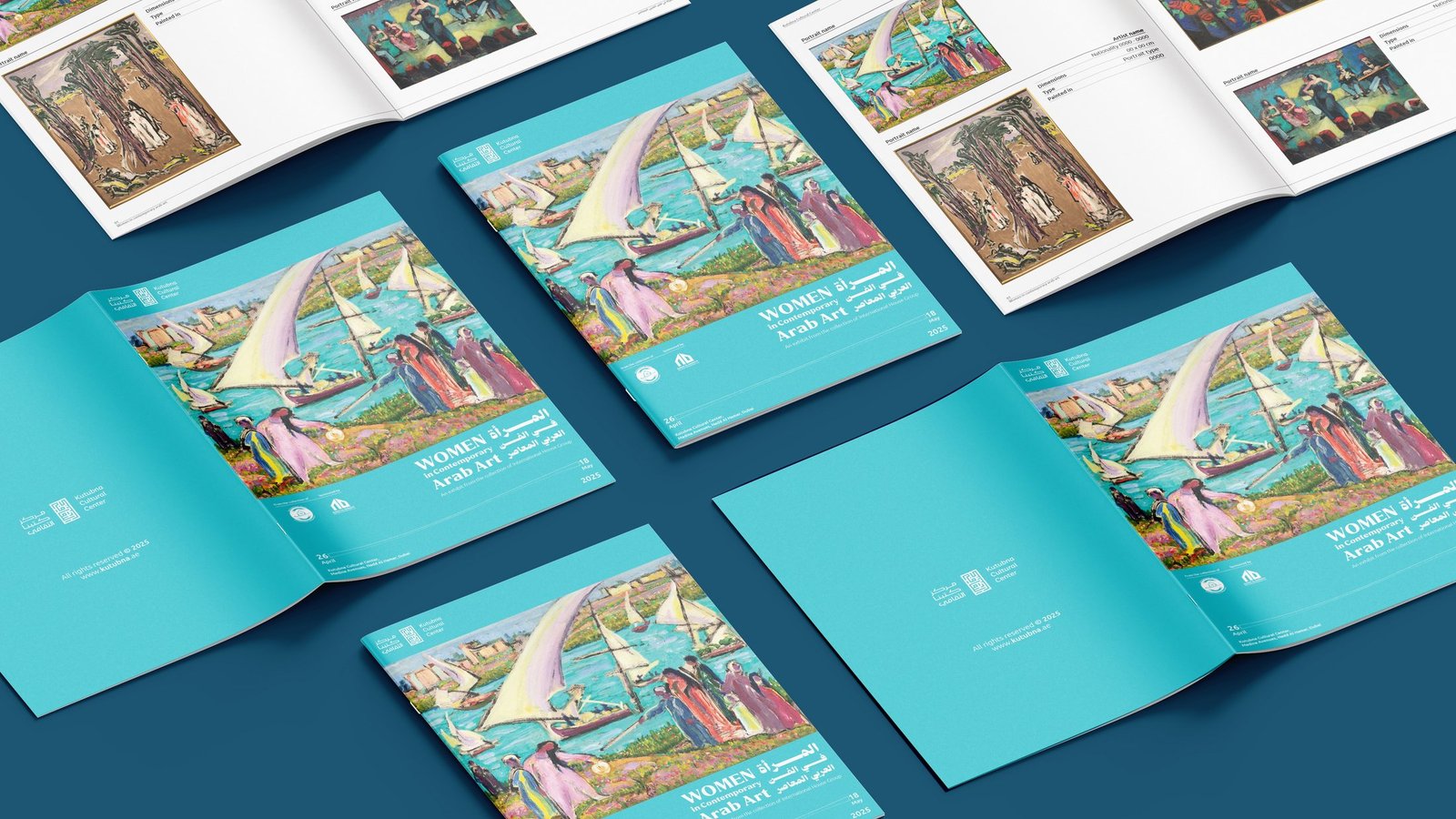
The first exhibition we designed for Kutubna Cultural Center: from twelve regions of research to a 44-page bilingual catalogue, and the visual system every Kutubna exhibition has followed since.
- 35works
- 20Arab artists
- 44catalogue pages
- 7exhibitions on one system
01The brief
Kutubna’s first exhibition, and the look of every one after it.
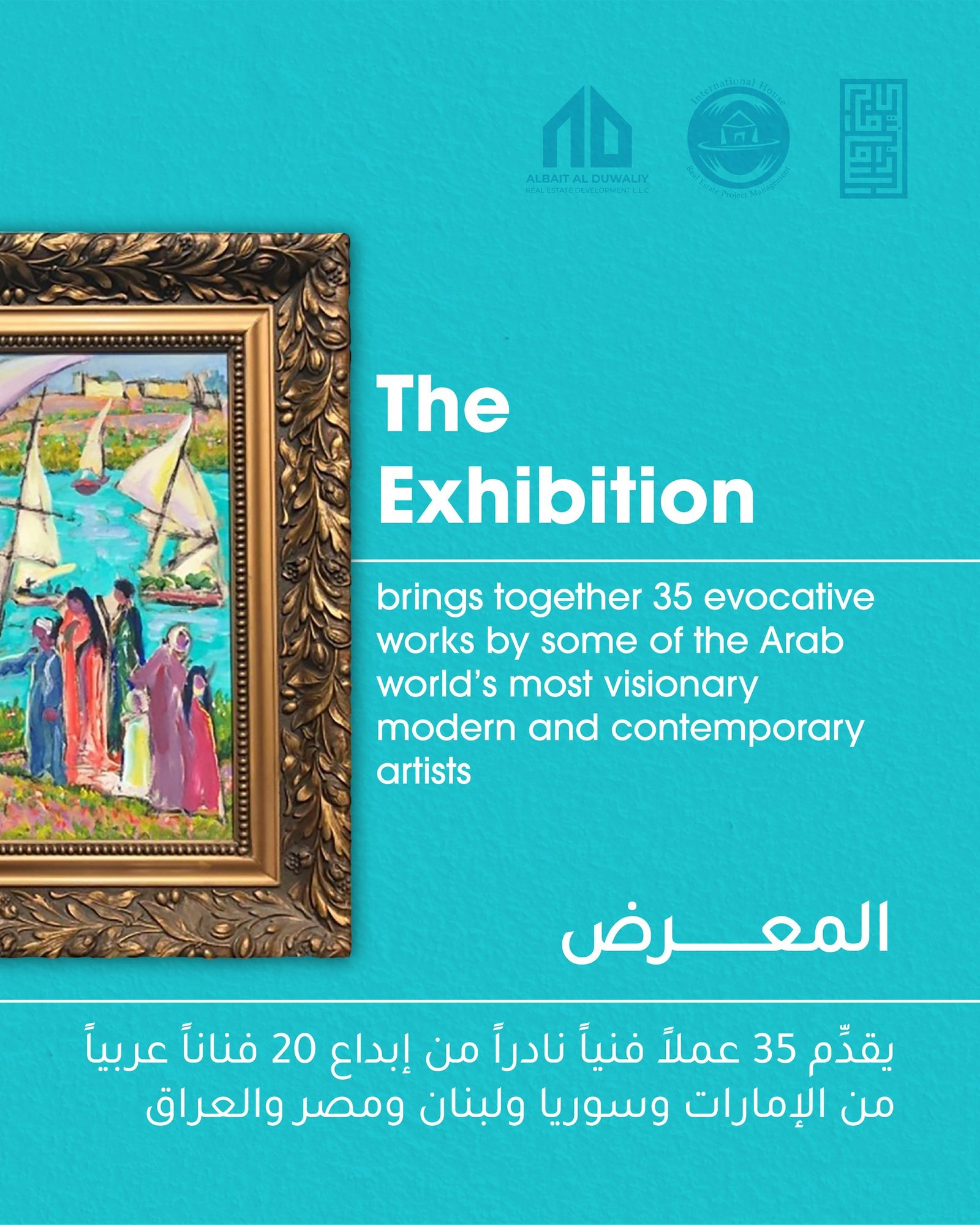
Kutubna Cultural Center opened its exhibition programme with 35 works by 20 Arab artists from the collection of International House Group, painted between 1945 and 2011. Nothing existed yet: no exhibition identity, no catalogue format, no way of announcing a show. Whatever we made here would become the starting point for everything that followed.
The audience
A wide Dubai audience, reached in Arabic and English with equal care.
The art
Modern masters from the UAE, Syria, Lebanon, Egypt and Iraq. The design had to frame the work, never compete with it.
02The research
Twelve regions, twelve wardrobes.
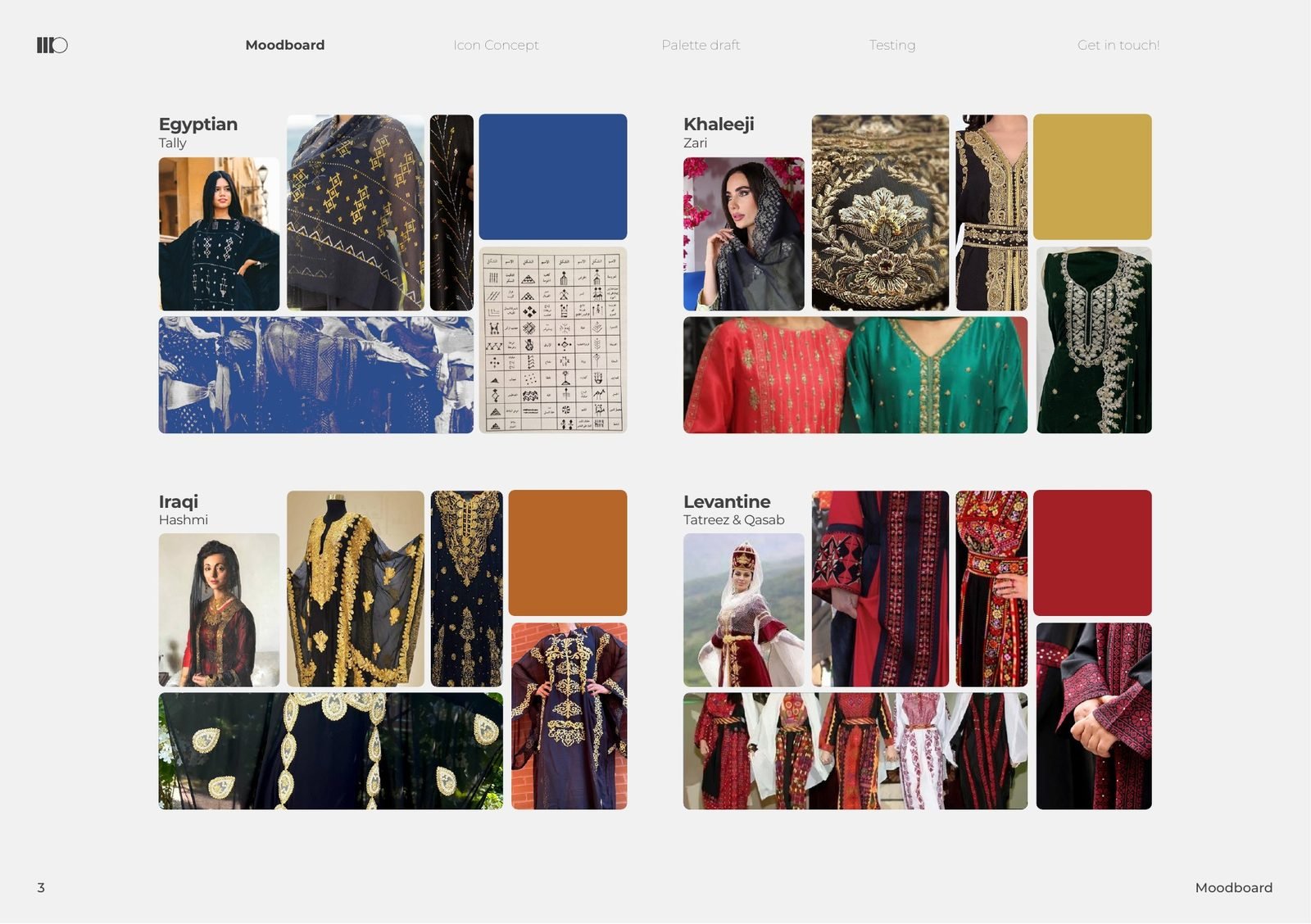
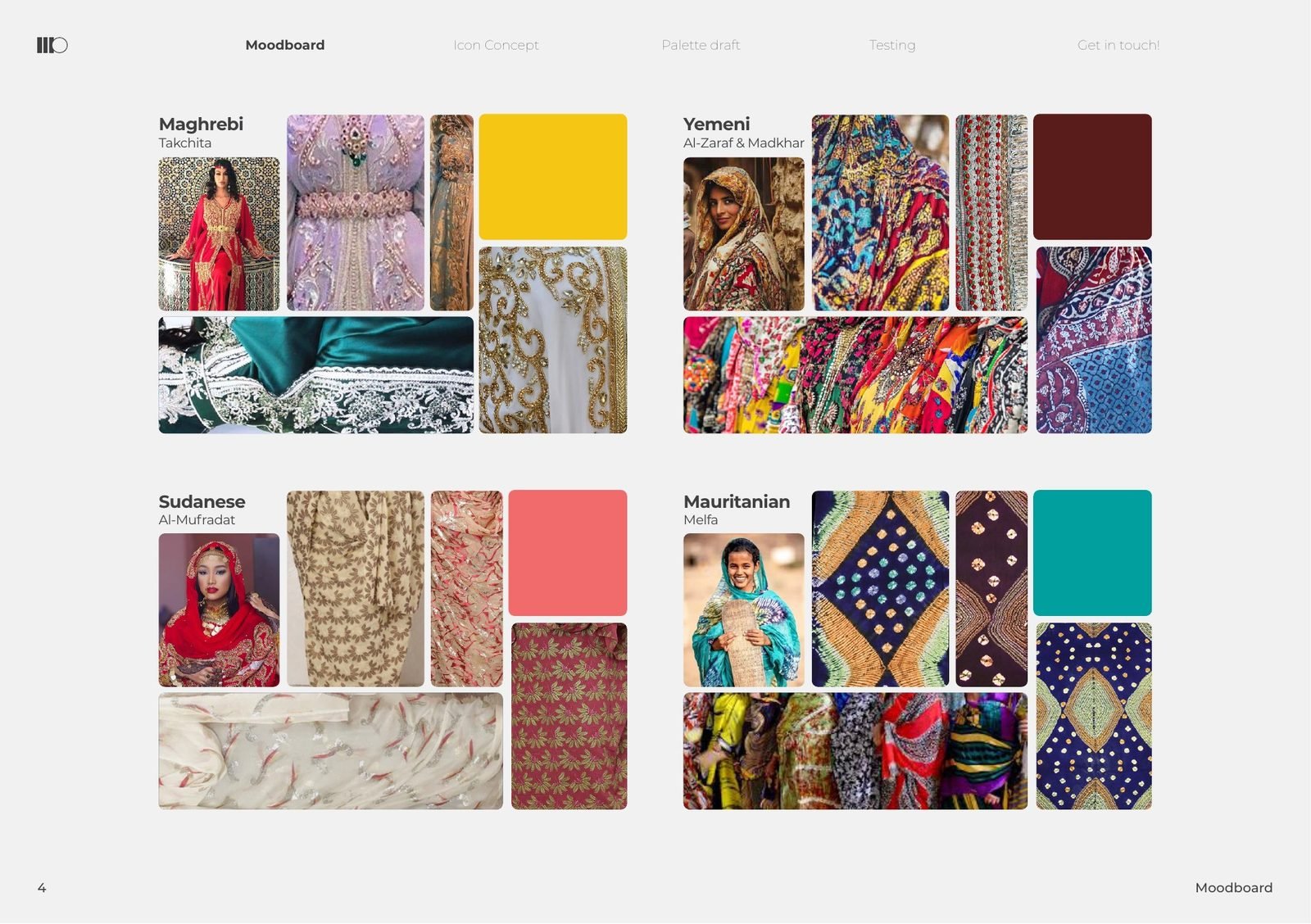
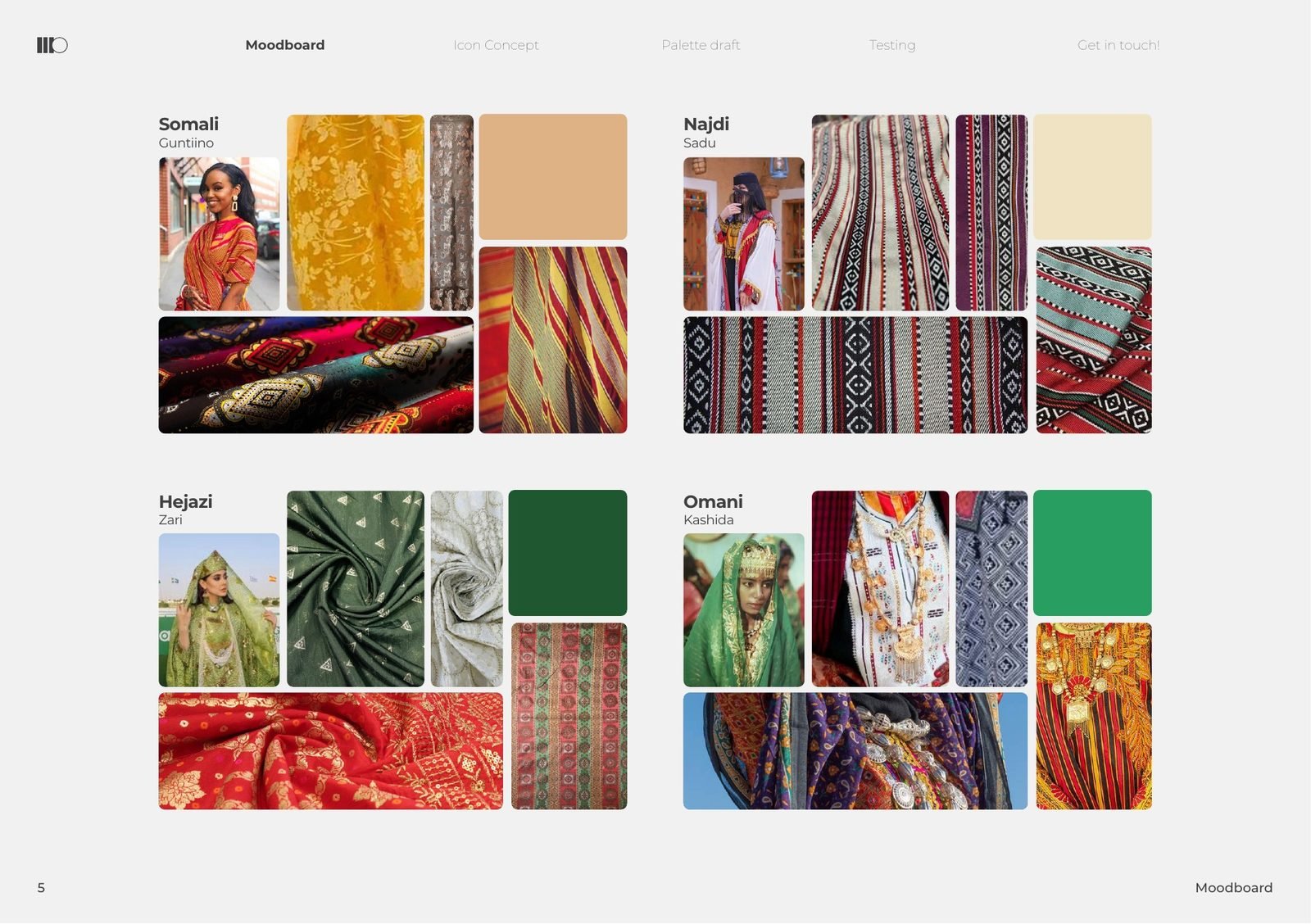
The exhibition is contemporary, but heritage lives close to the surface, and nothing carries it like what women wear. We mapped twelve Arab cultural regions and studied their traditional dress, the embroidery, weaving and thread work behind each one, to find colour and pattern the whole show could draw from.
- Egyptian
Tally
Metal-thread embroidery
- Gulf
Zari
Gold and silver embroidery
- Iraqi
Shajar
Floral motifs in gold thread
- Levantine
Tatreez
Cross-stitch embroidery
- Maghrebi
Randa
Fine Moroccan needlework
- Yemeni
Madkhar
Geometric patterns
- Sudanese
Al-Mufradat
Motifs printed on the thobe
- Mauritanian
Melfa
Abstract floral prints
- Somali
Guntiino
Striped, handwoven cloth
- Najdi
Sadu
Bedouin weaving
- Hejazi
Zari
Gold thread on the thobe
- Omani
Kashida
Hand-stitched florals
03The mark
One letter, repeated twelve times.
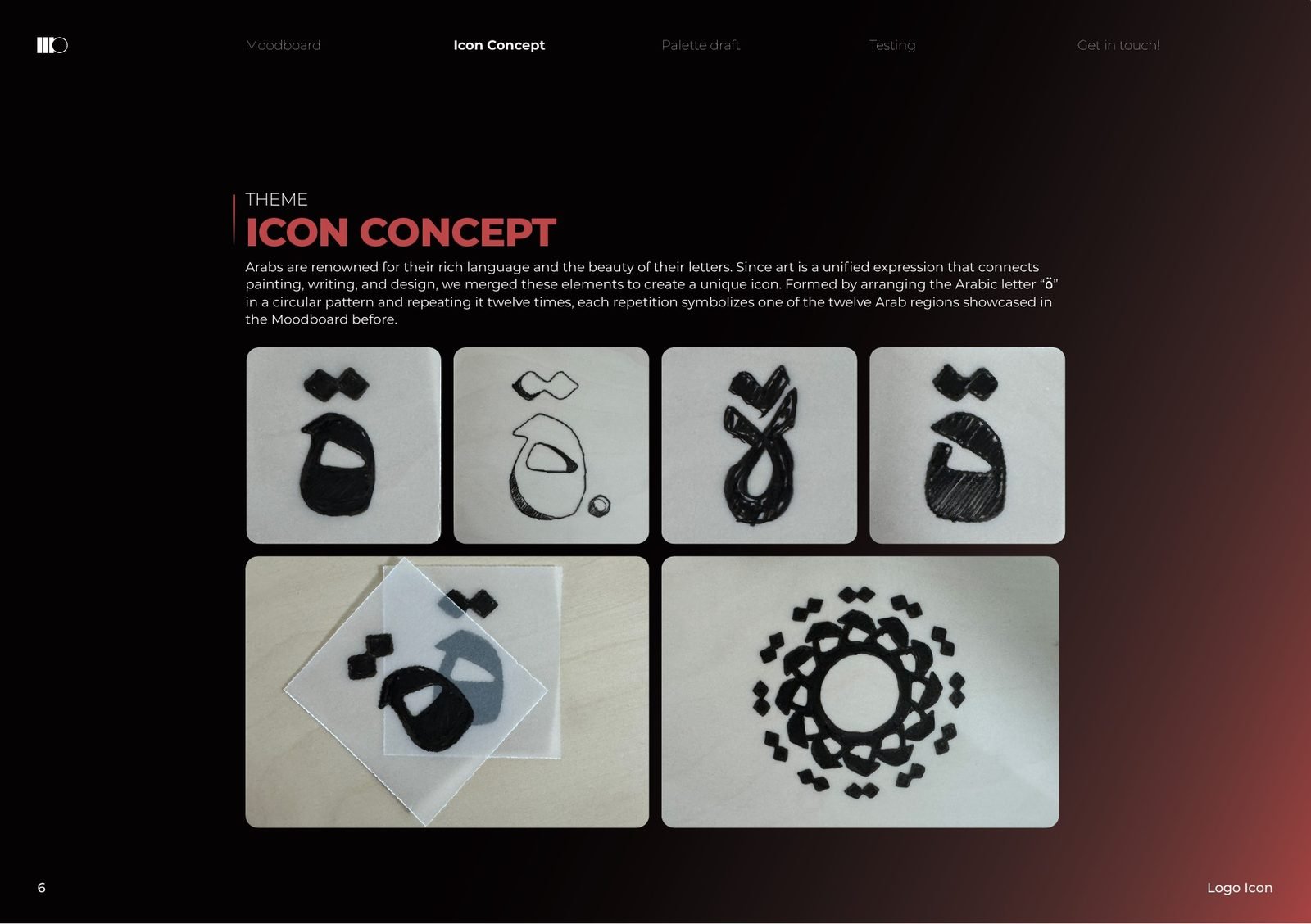
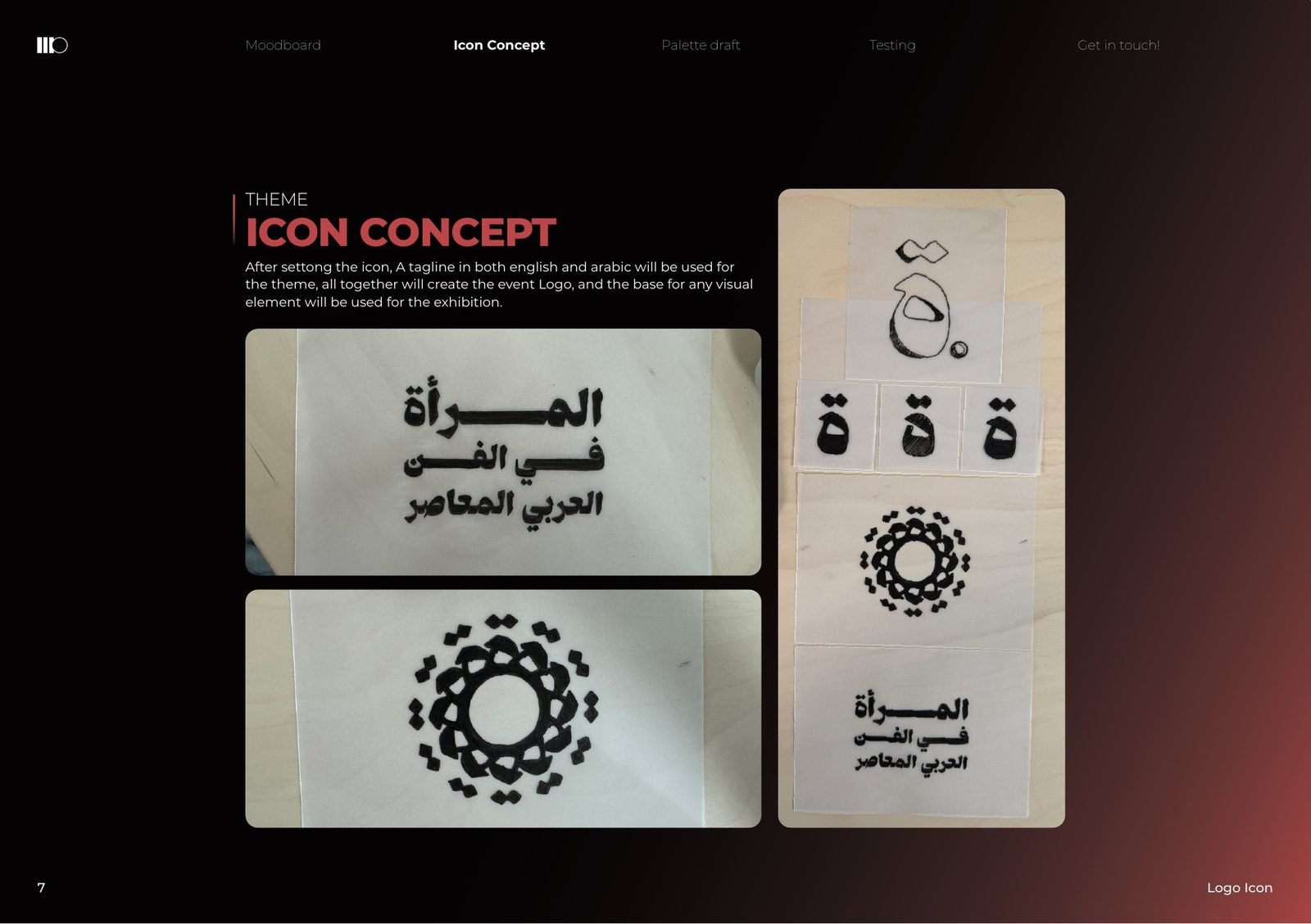
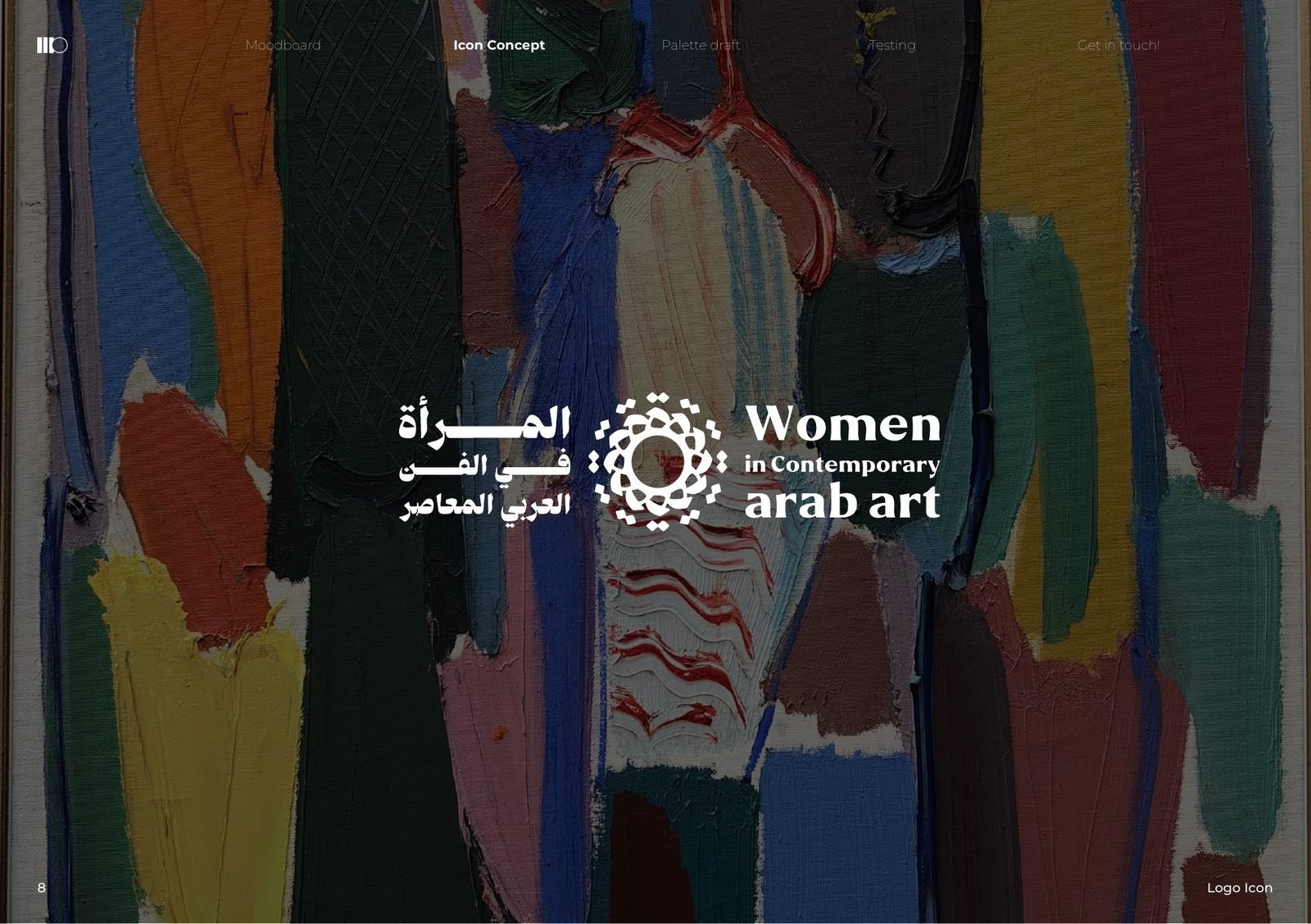
In Arabic, the letter ة marks the feminine. We set it in a circle twelve times, one for each region, so the mark reads as a single rosette from a distance and as writing up close: painting, calligraphy and design in one form.
ة × 12
The exhibition mark
04Exploring
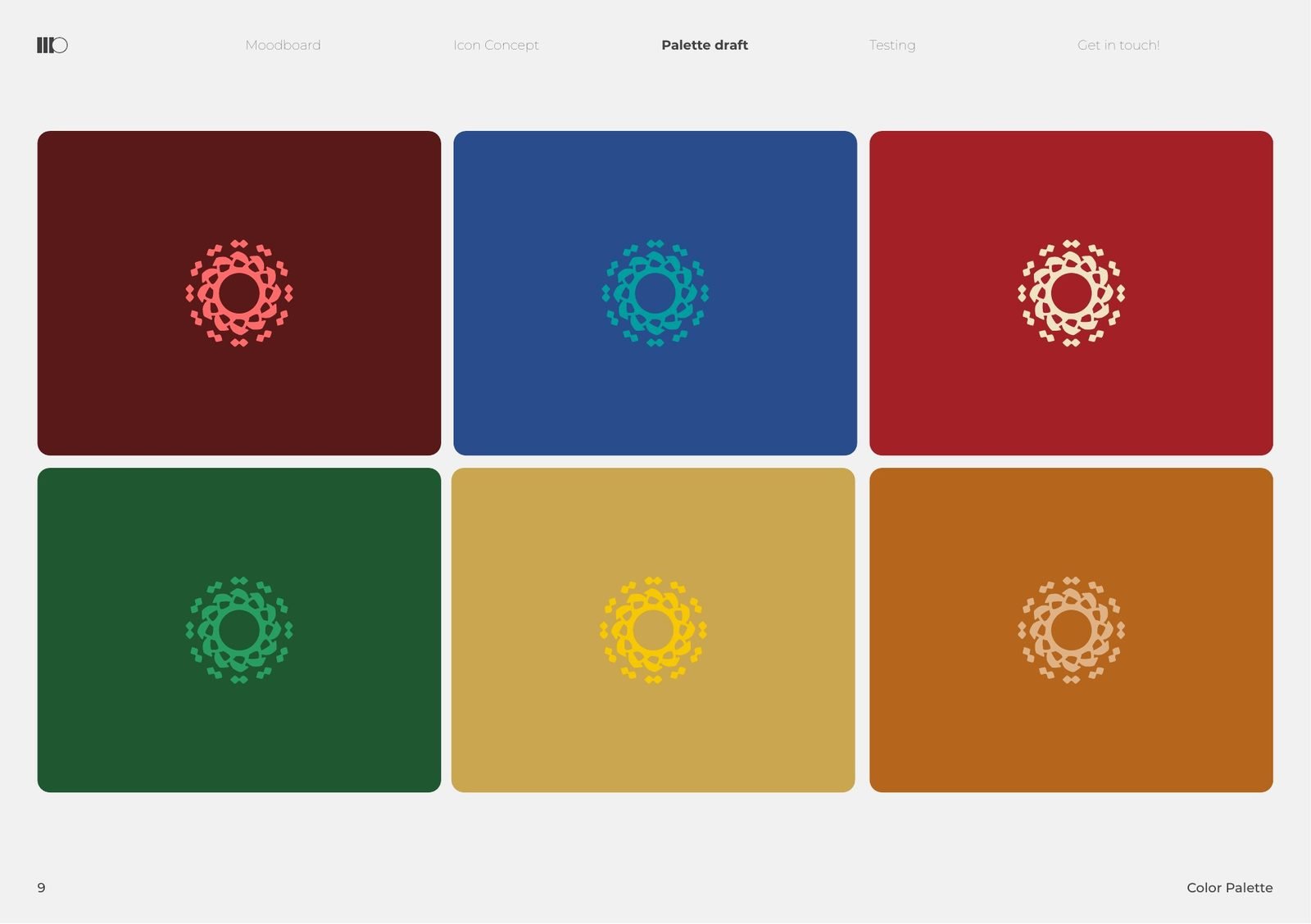
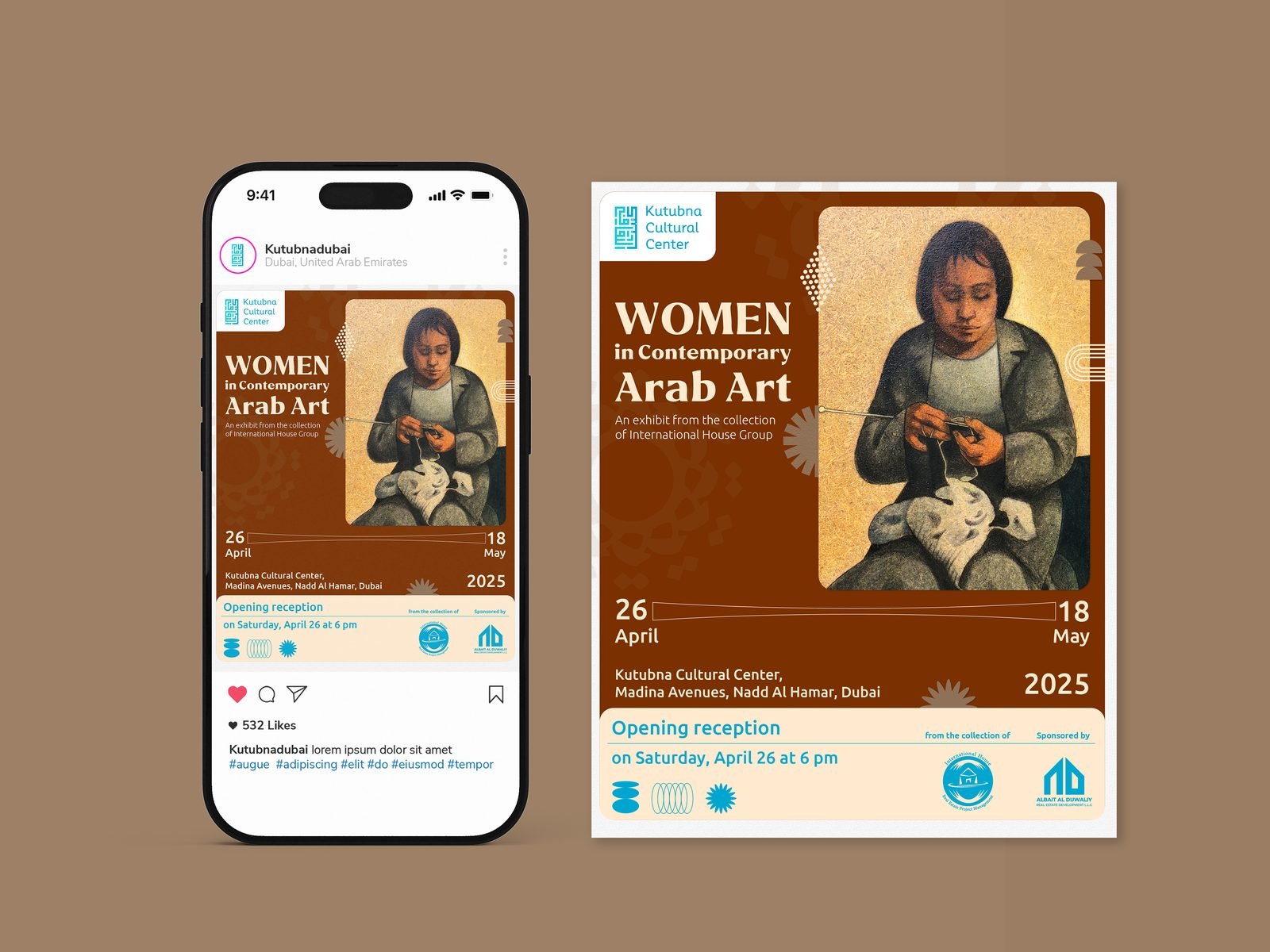
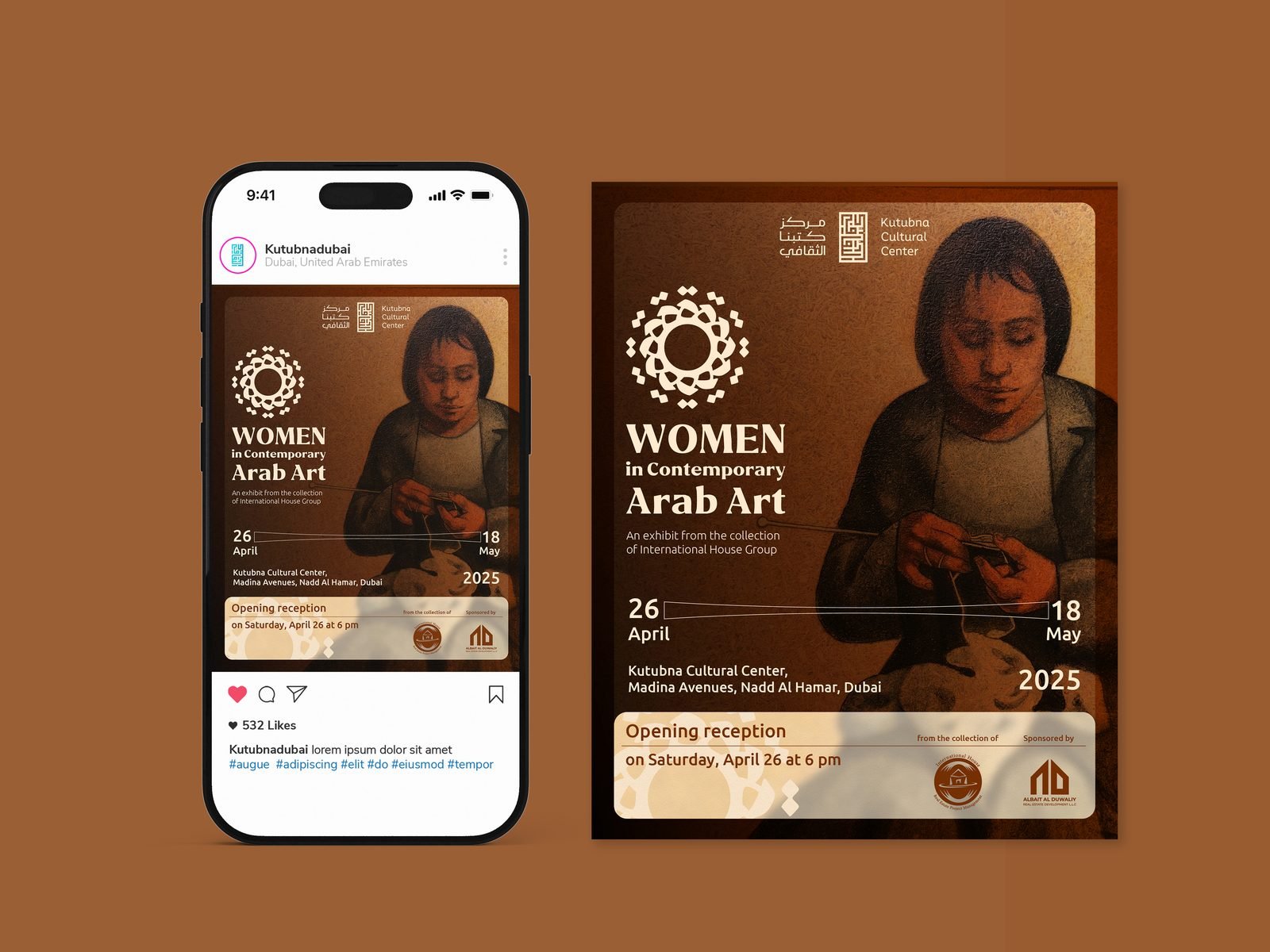
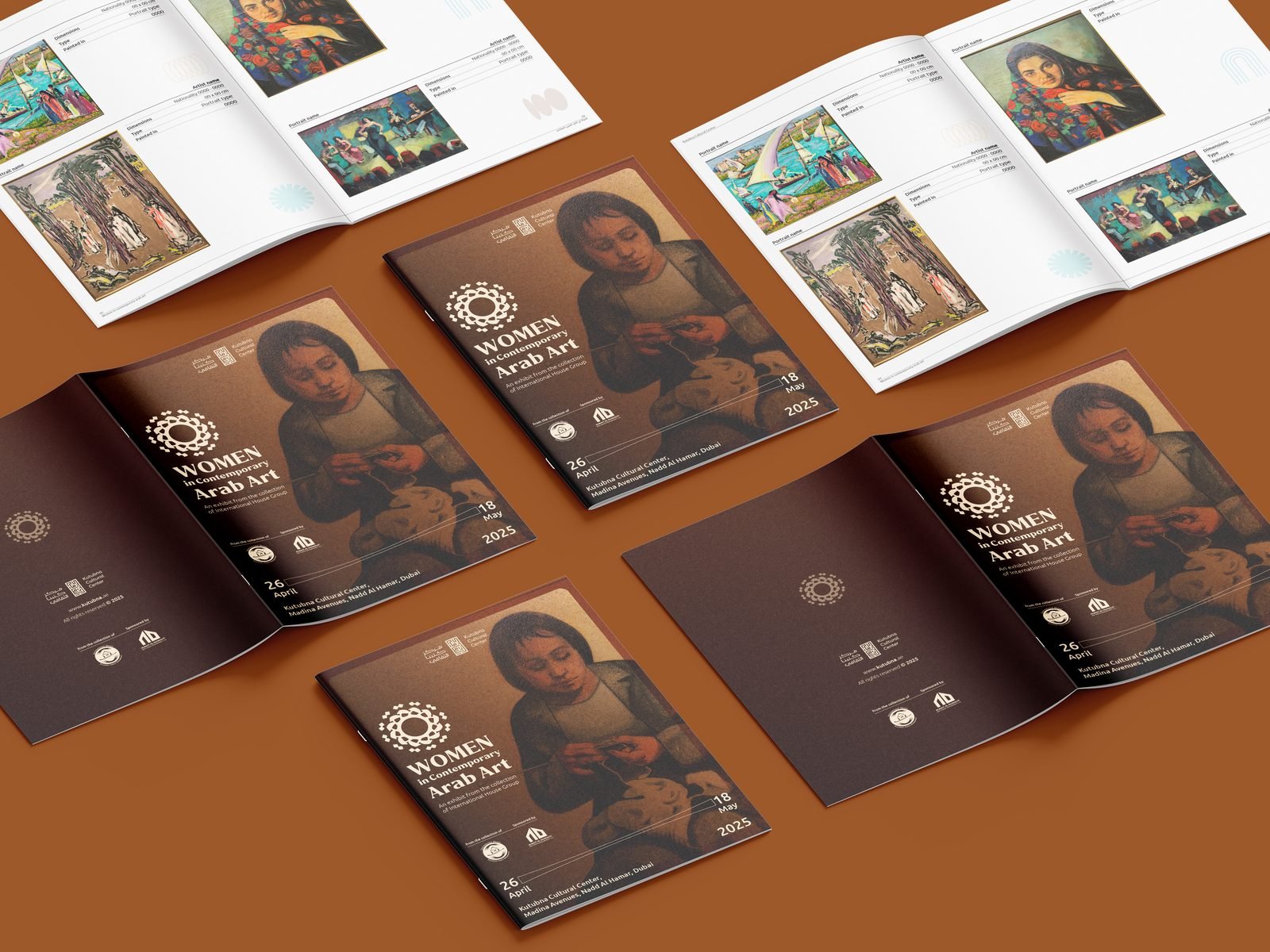
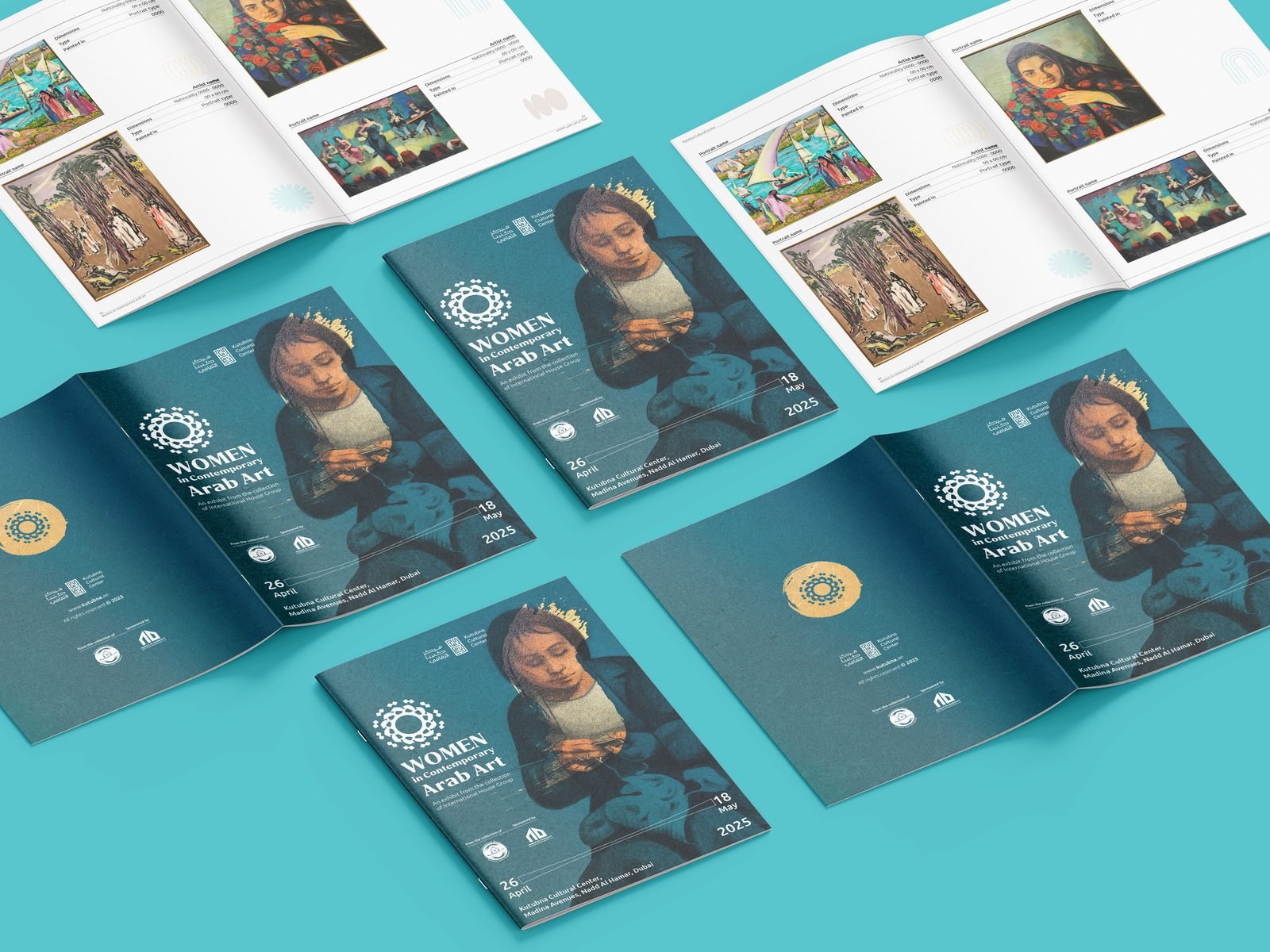
Six palettes, tested on the paintings themselves.
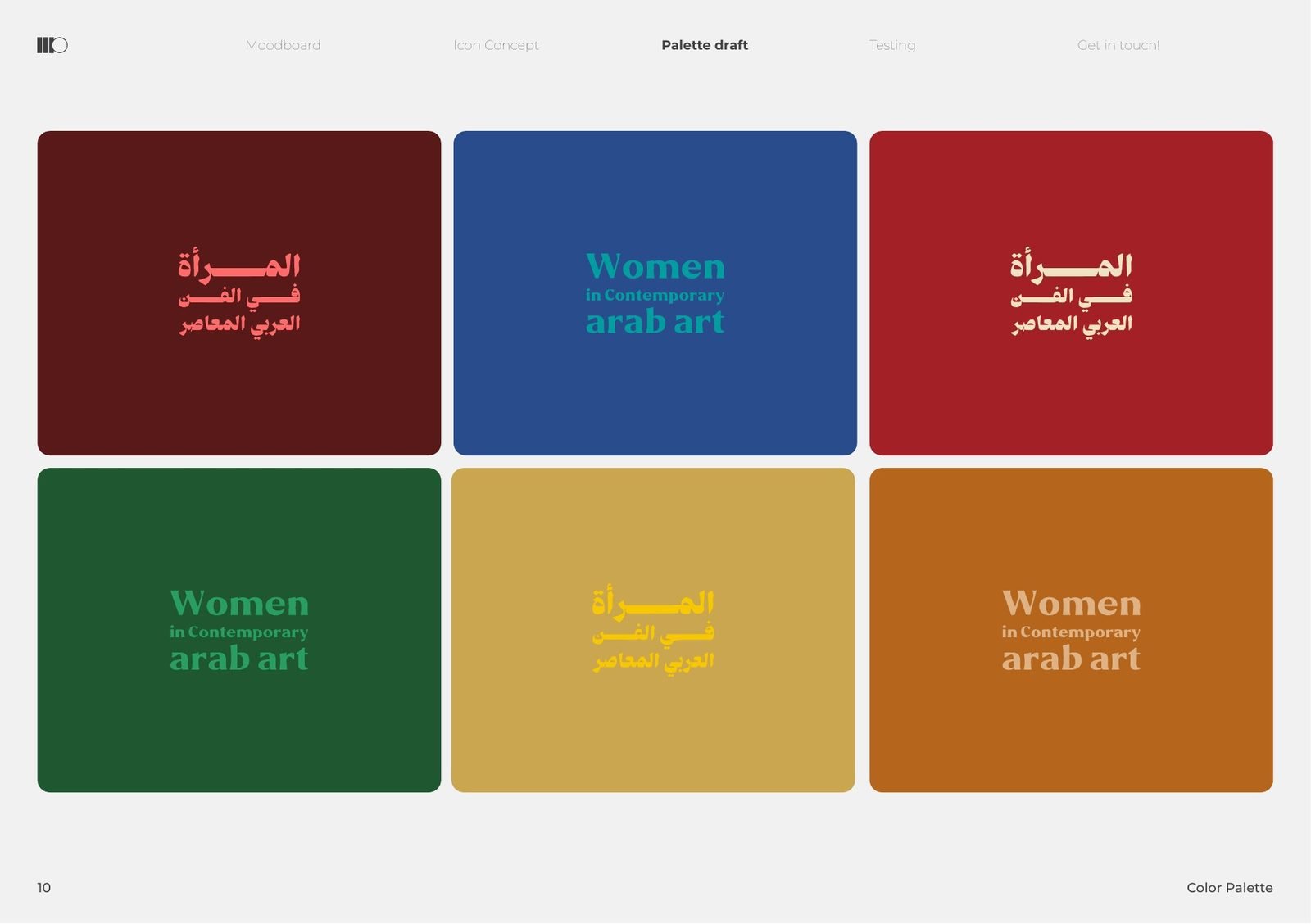
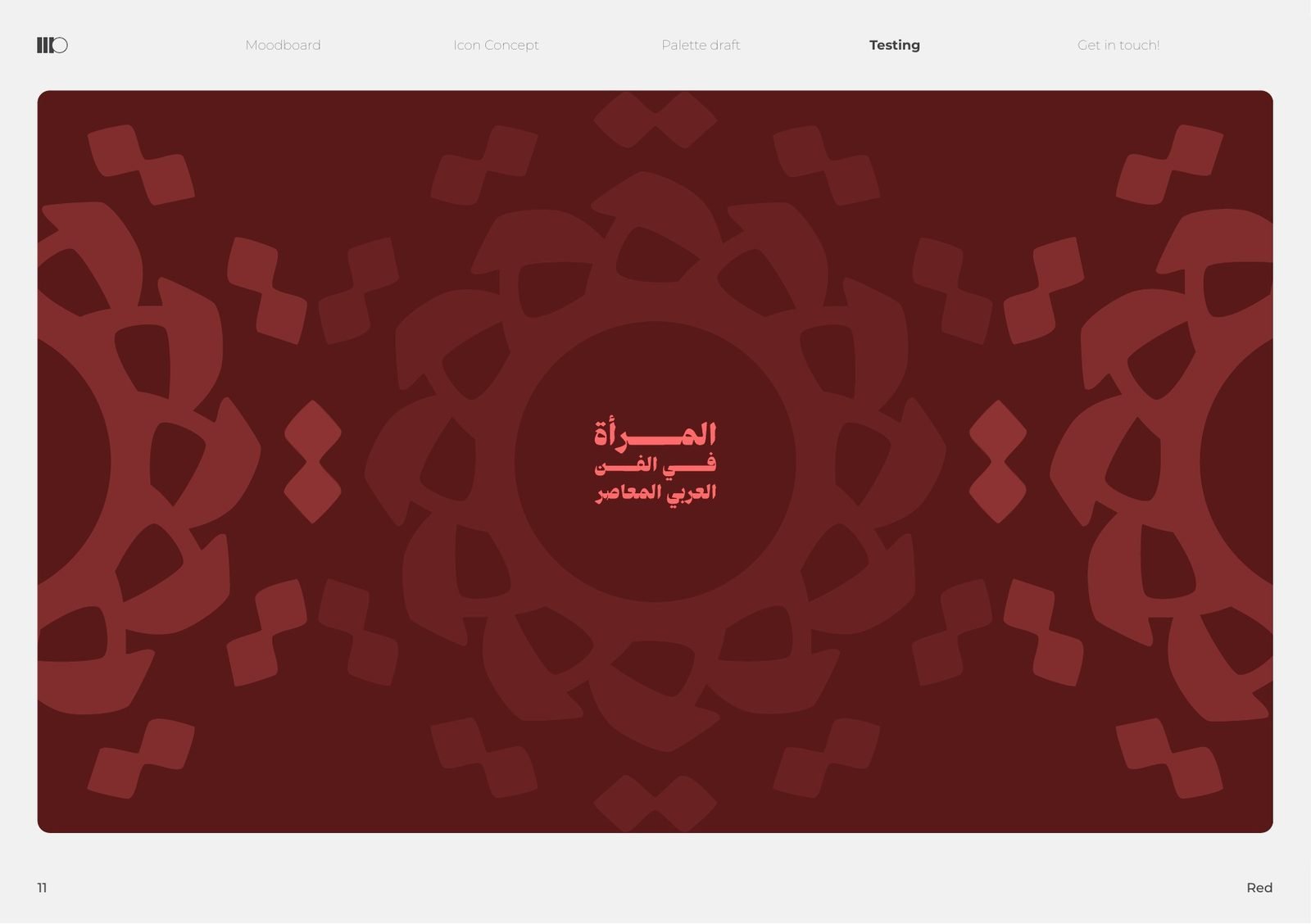
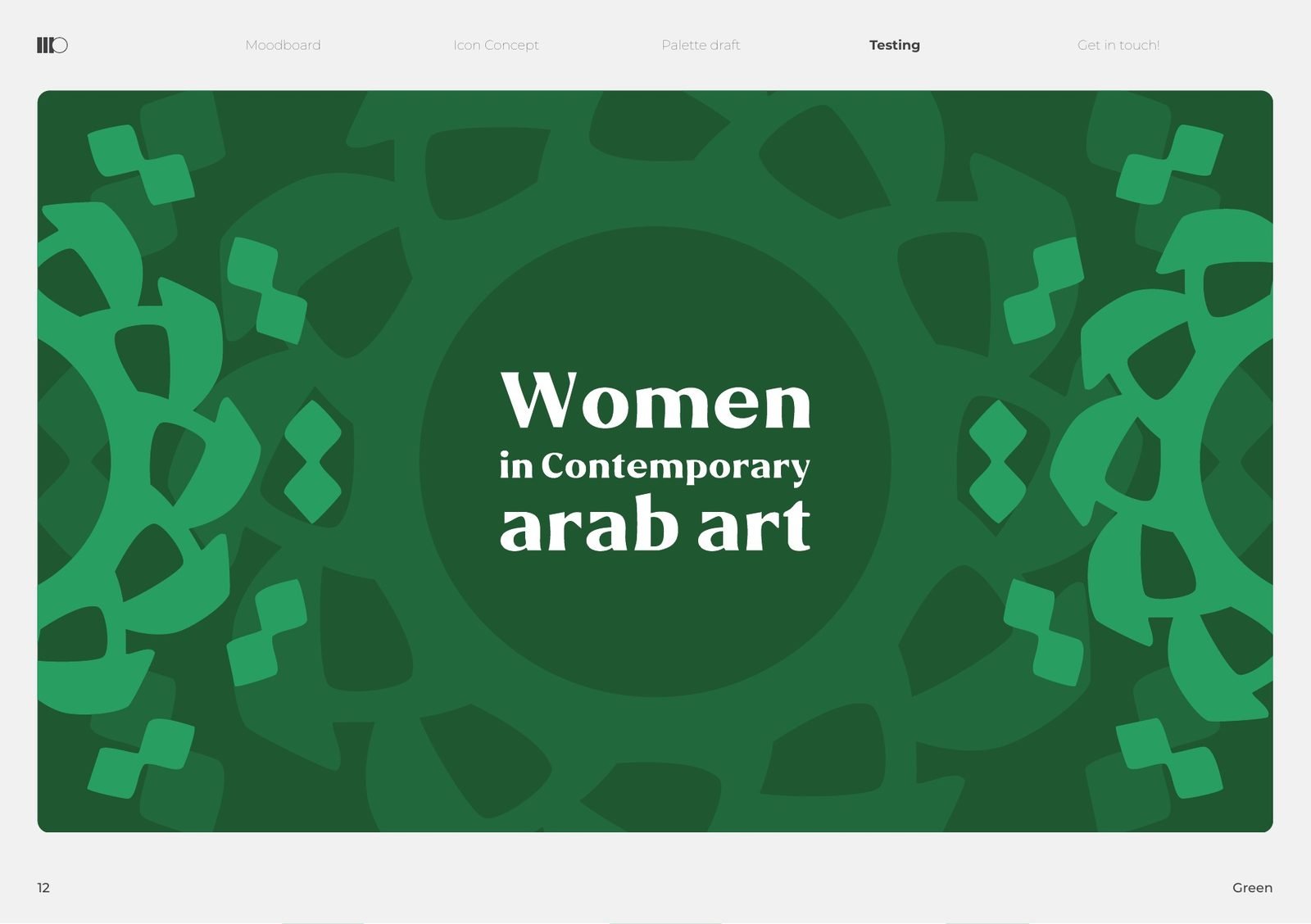
Each palette came from the regional dress: burgundy, indigo, crimson, emerald, saffron and copper. We tried them on patterns, on the title, and on covers built around different works from the collection, before narrowing down.
05The decision
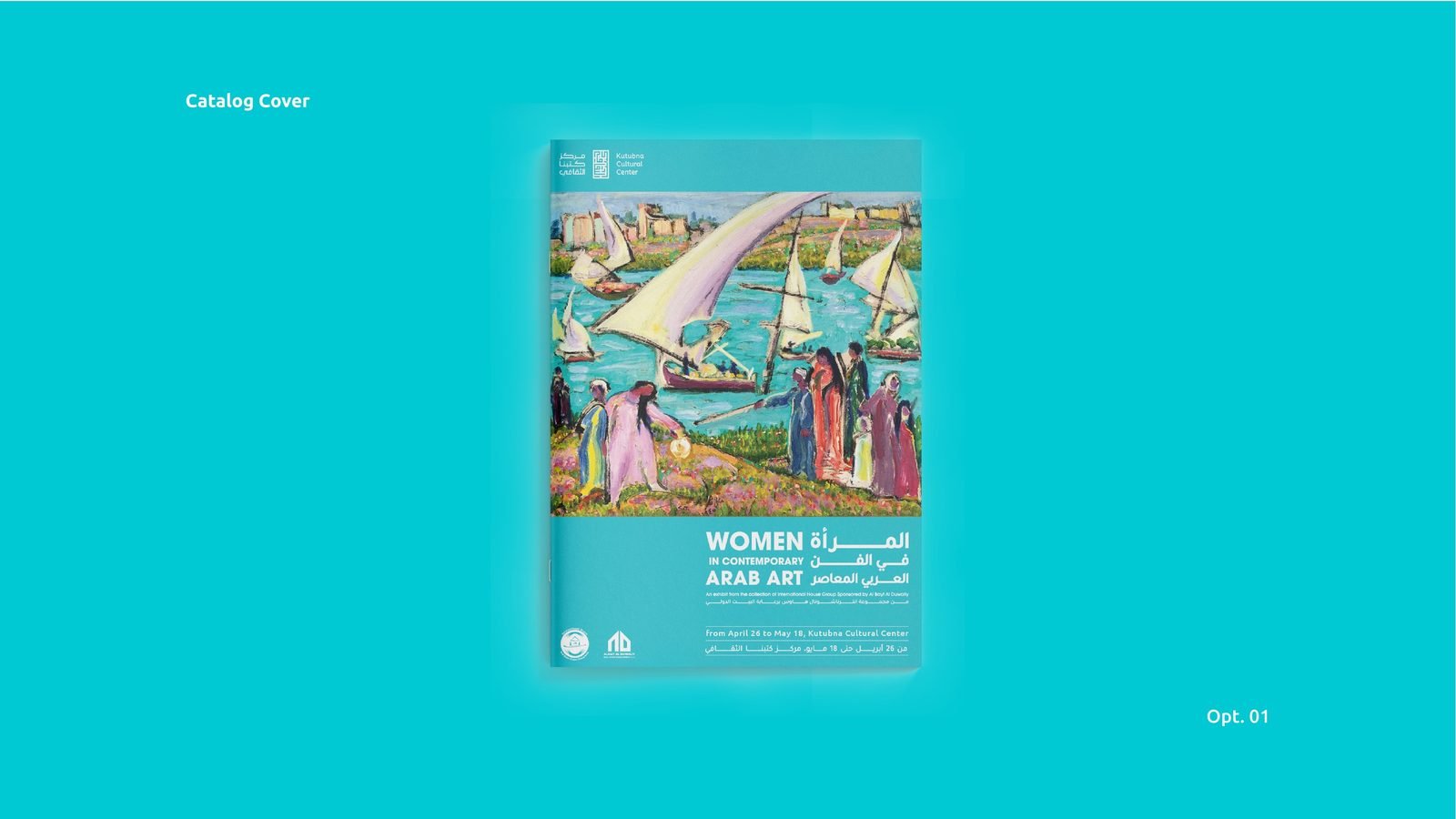
Then we let one painting lead.
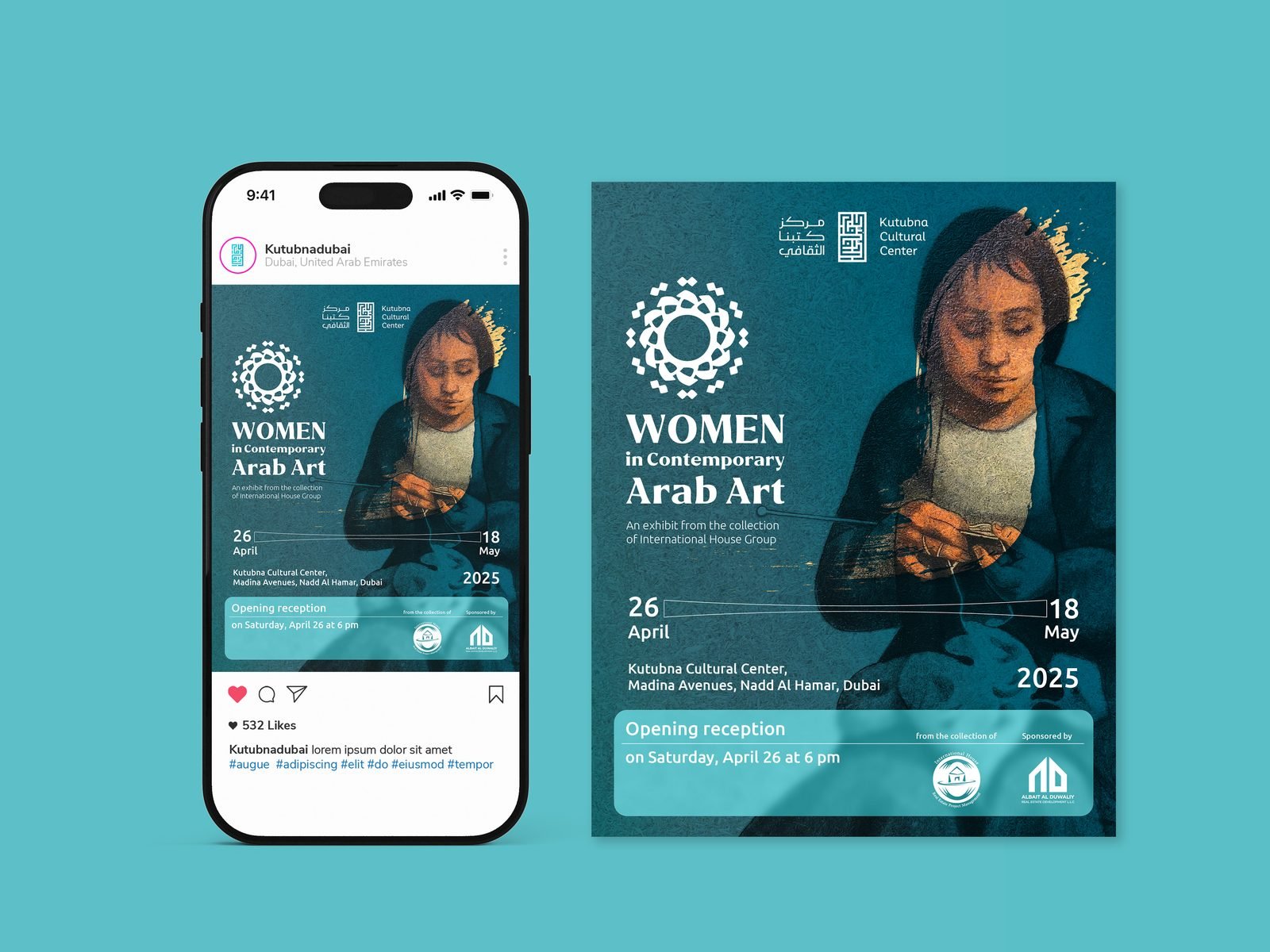
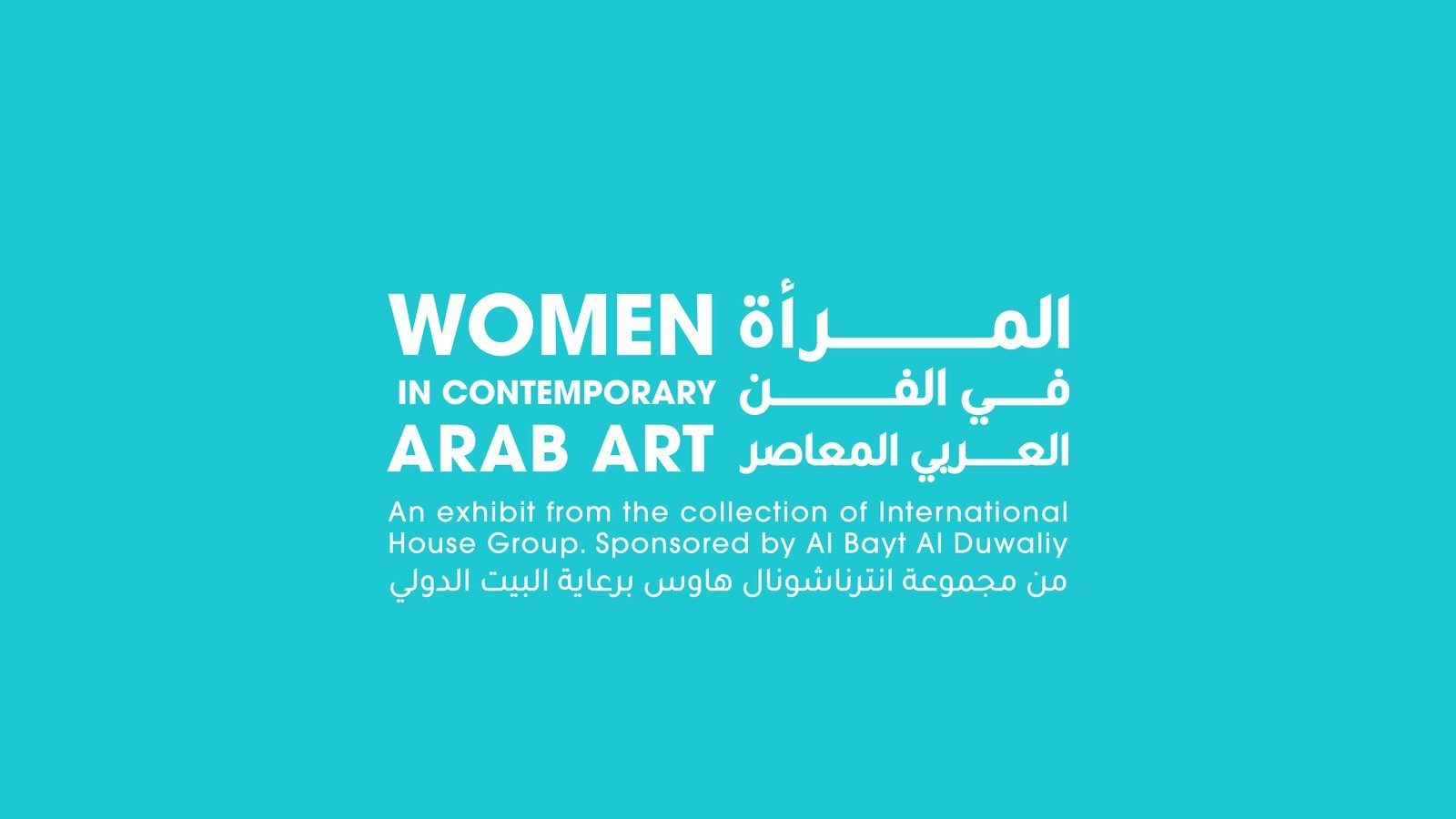
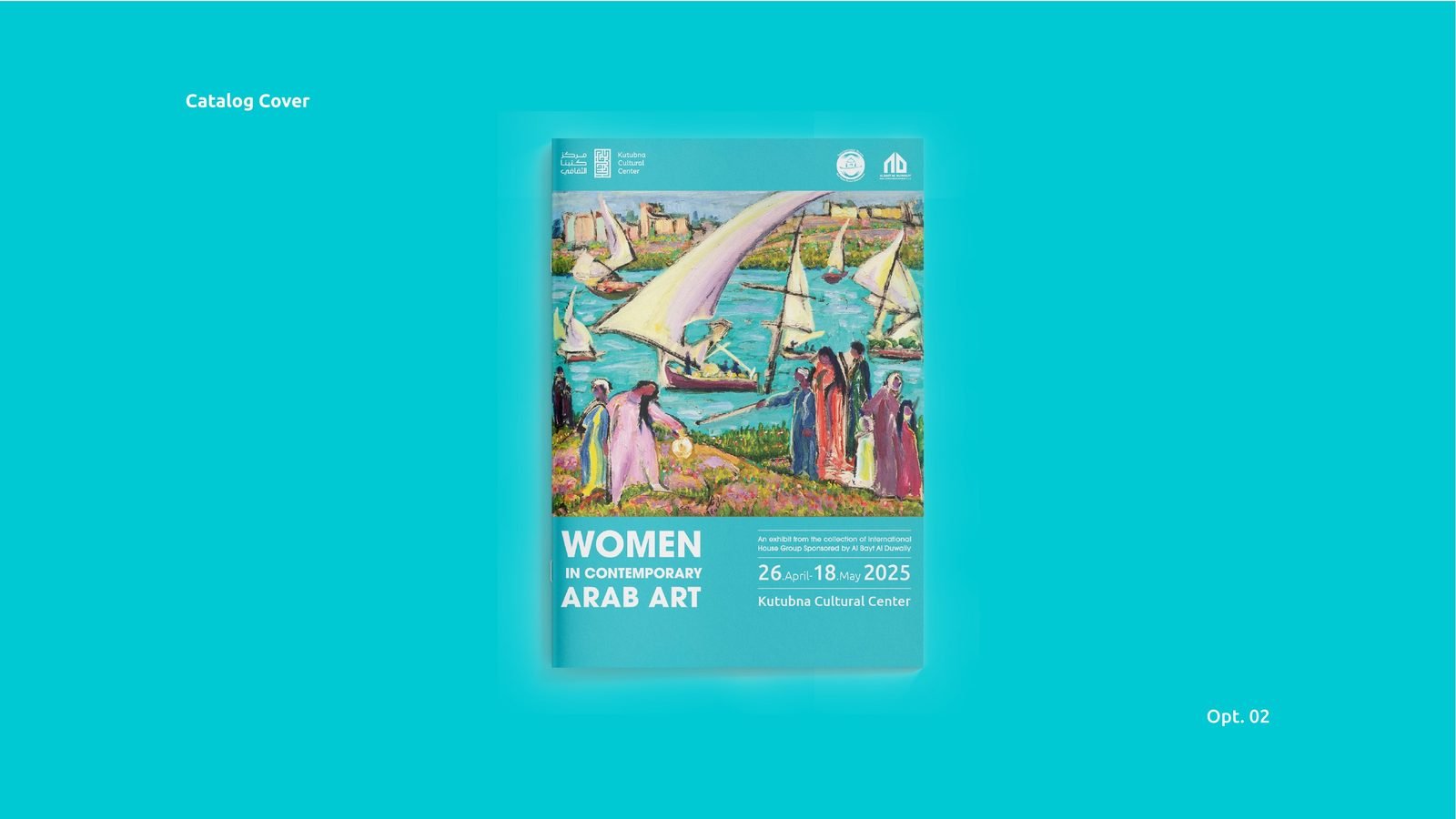
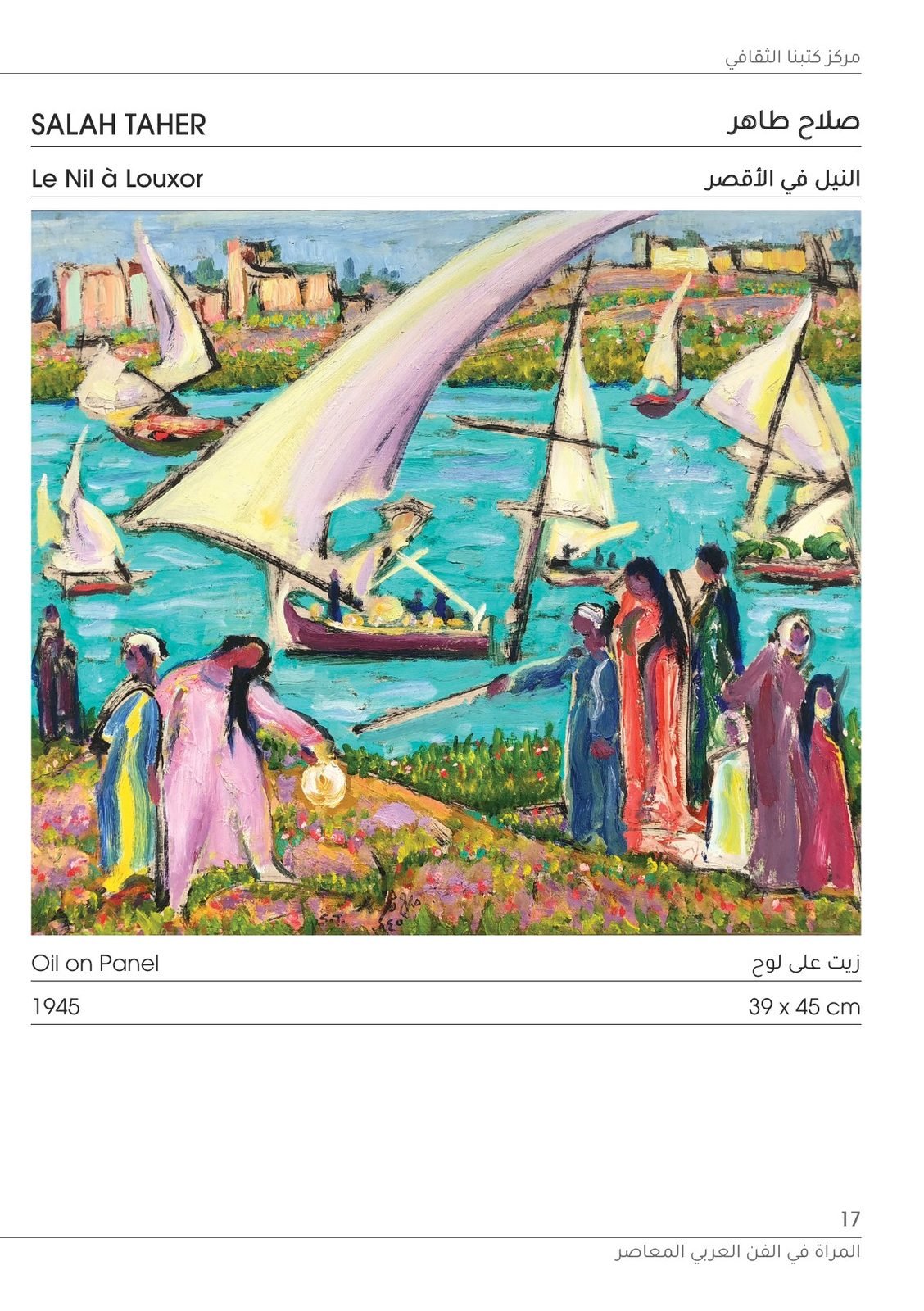
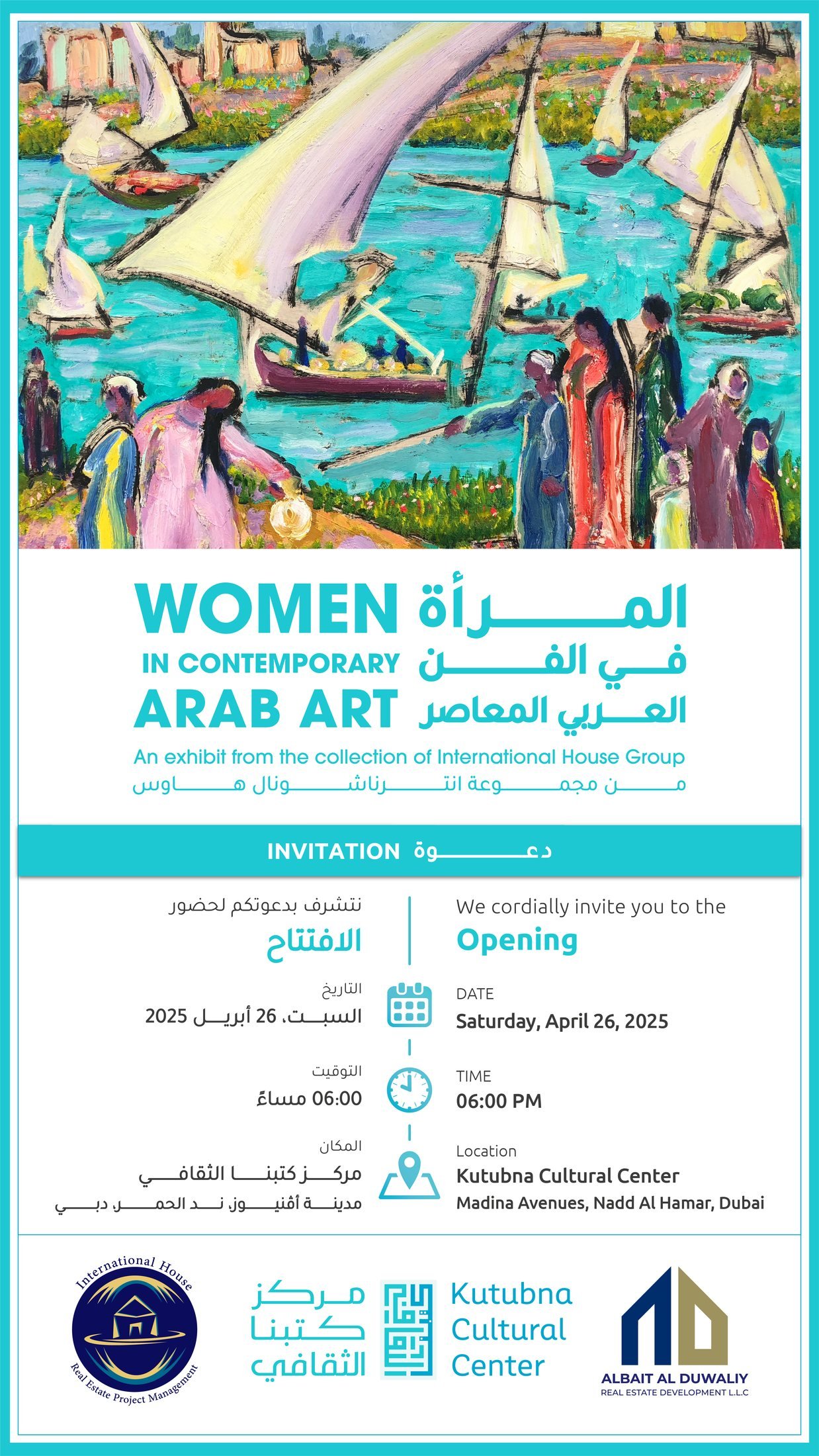
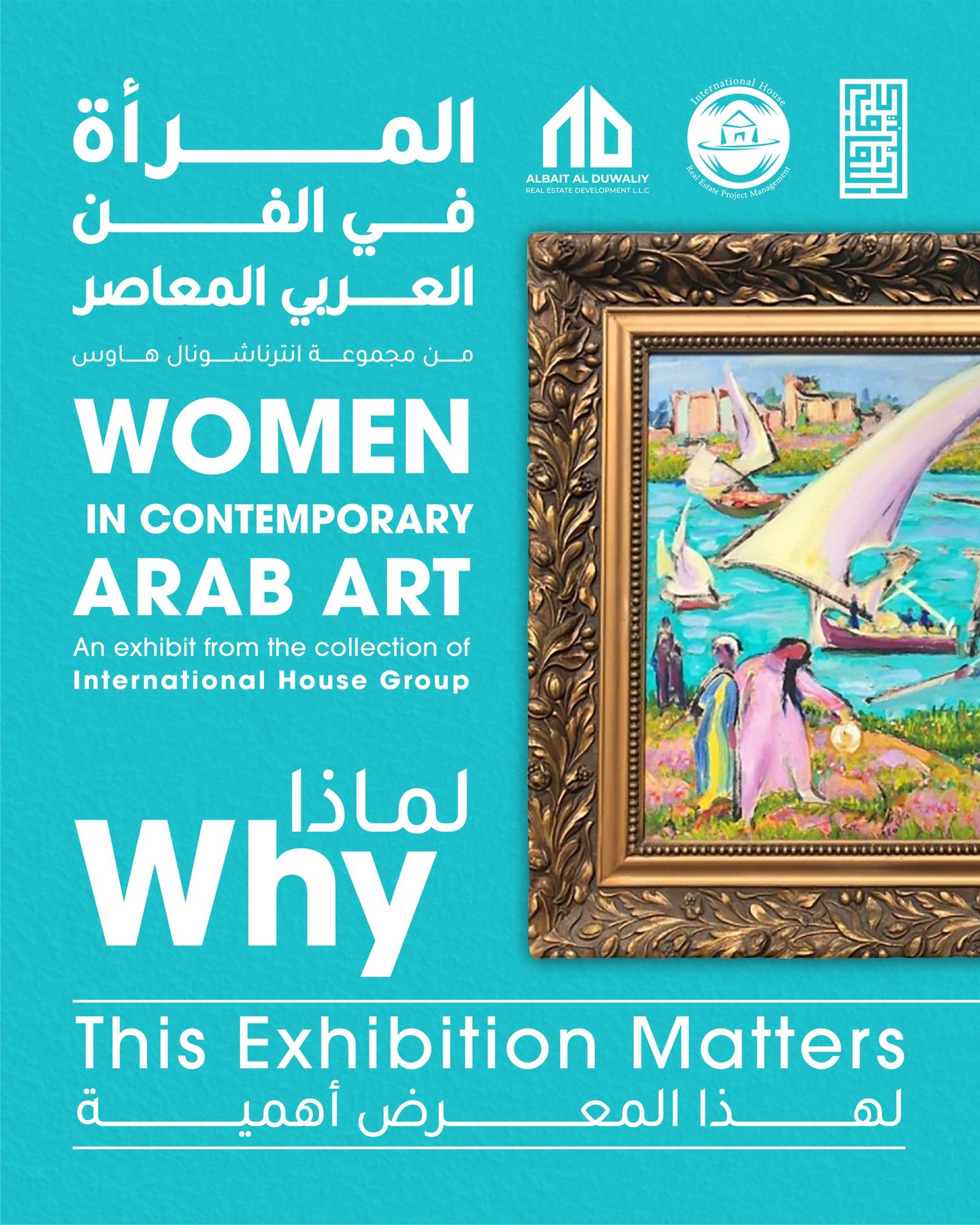
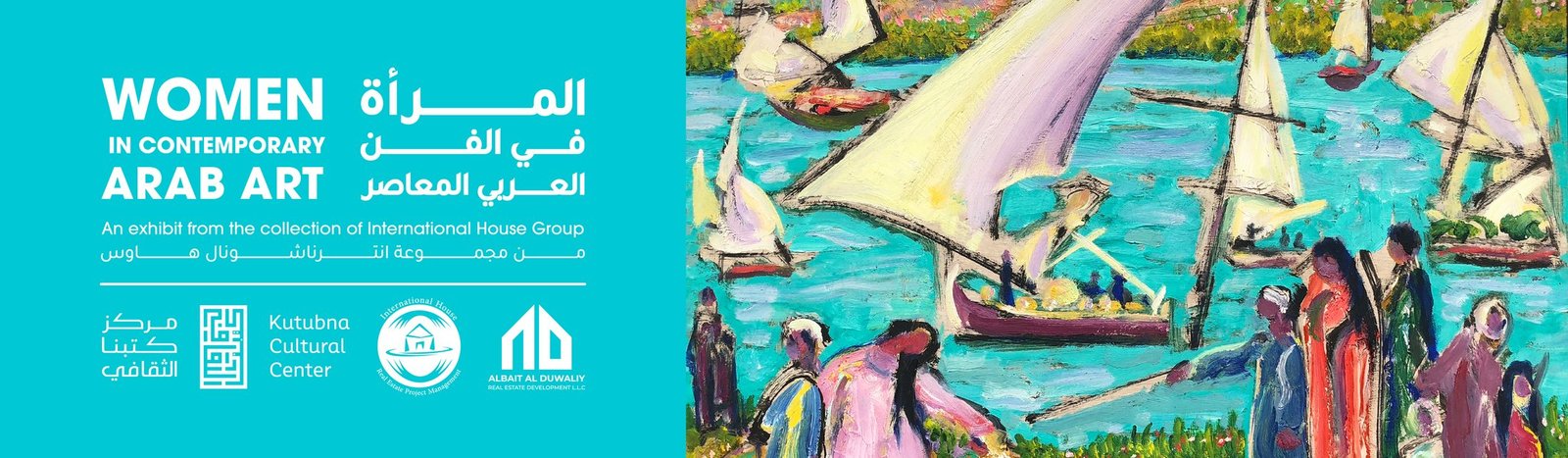
In the final round, the direction settled on a single work at the front: Salah Taher’s Le Nil à Luxor. We drew one turquoise from its water and built a bilingual title lockup, ITC Avant Garde Gothic with Tajawal, to sit beside it. The research stayed in the system as rhythm and restraint; the painting did the talking.
Colour
- Exhibition turquoise#1DC8D2
Type
- ITC Avant Garde Gothic
- Tajawal
06The catalogue
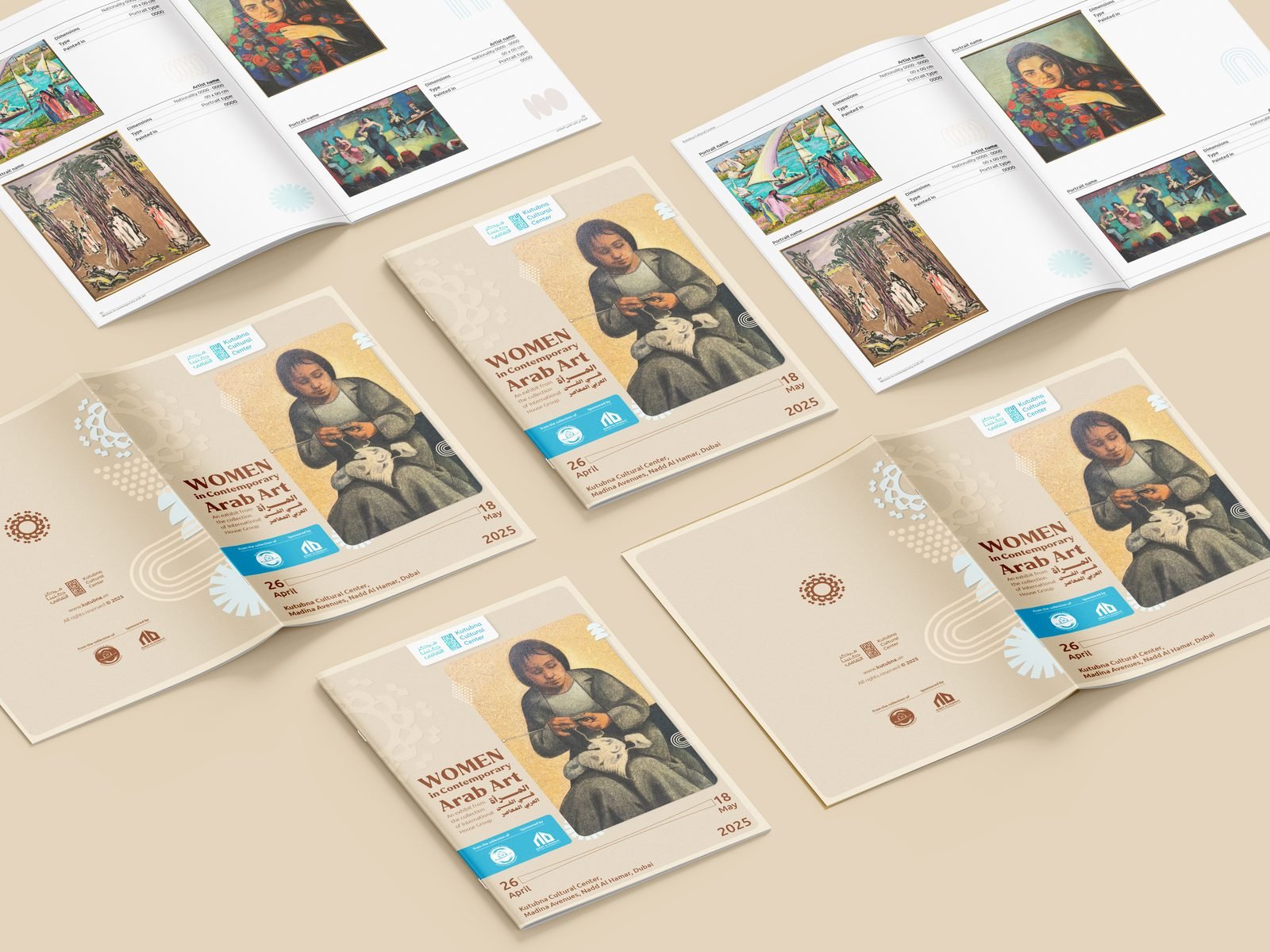
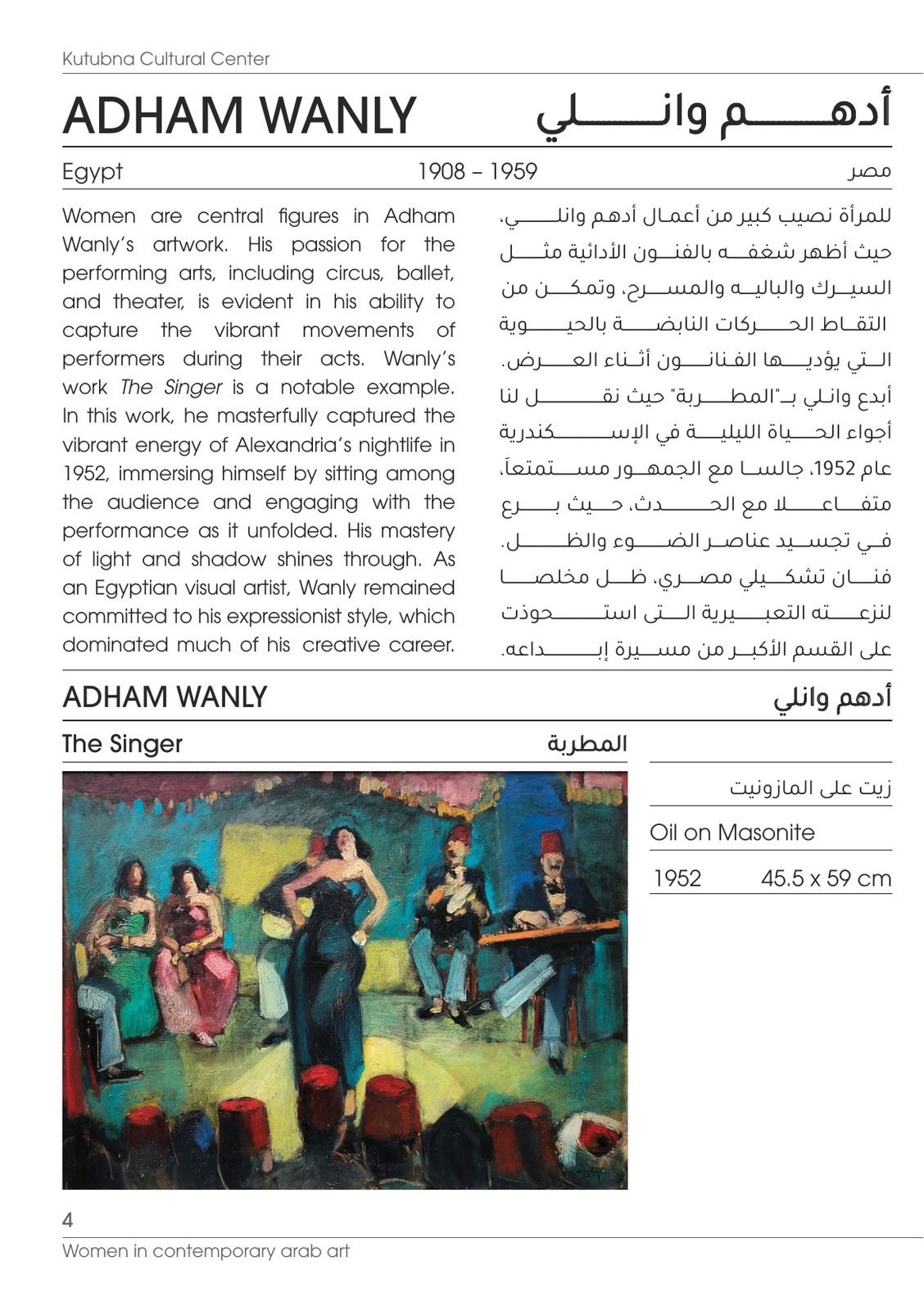
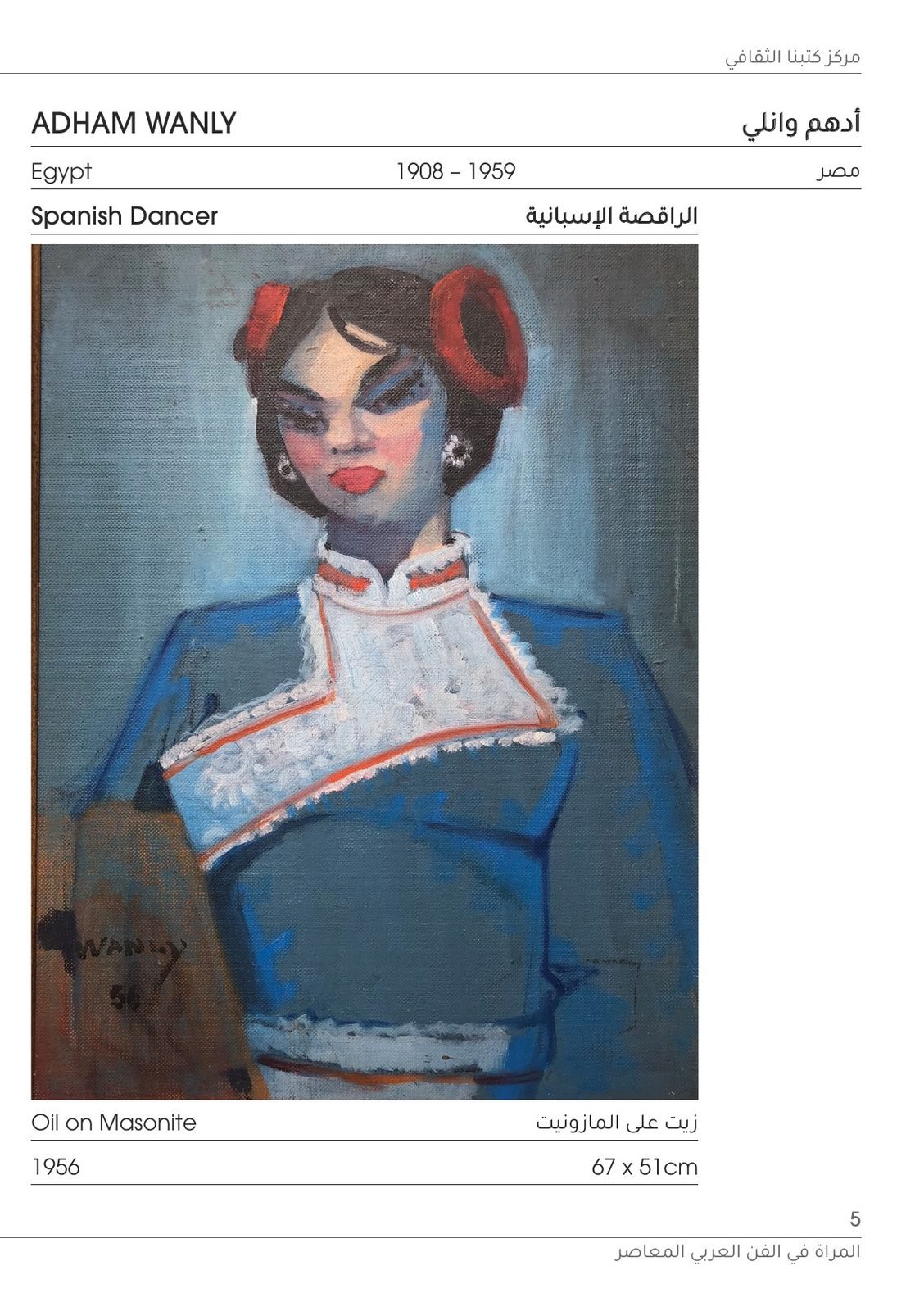
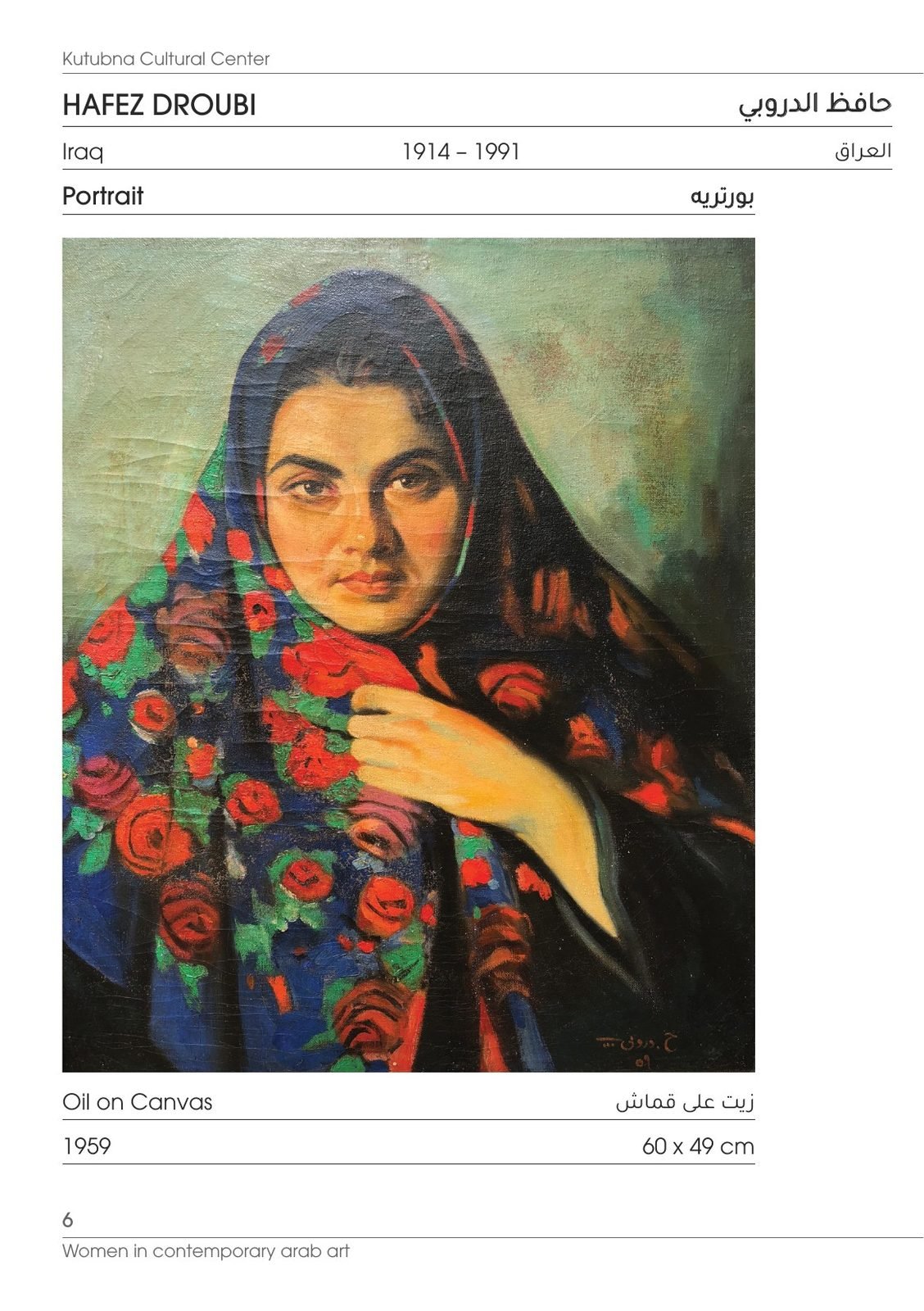
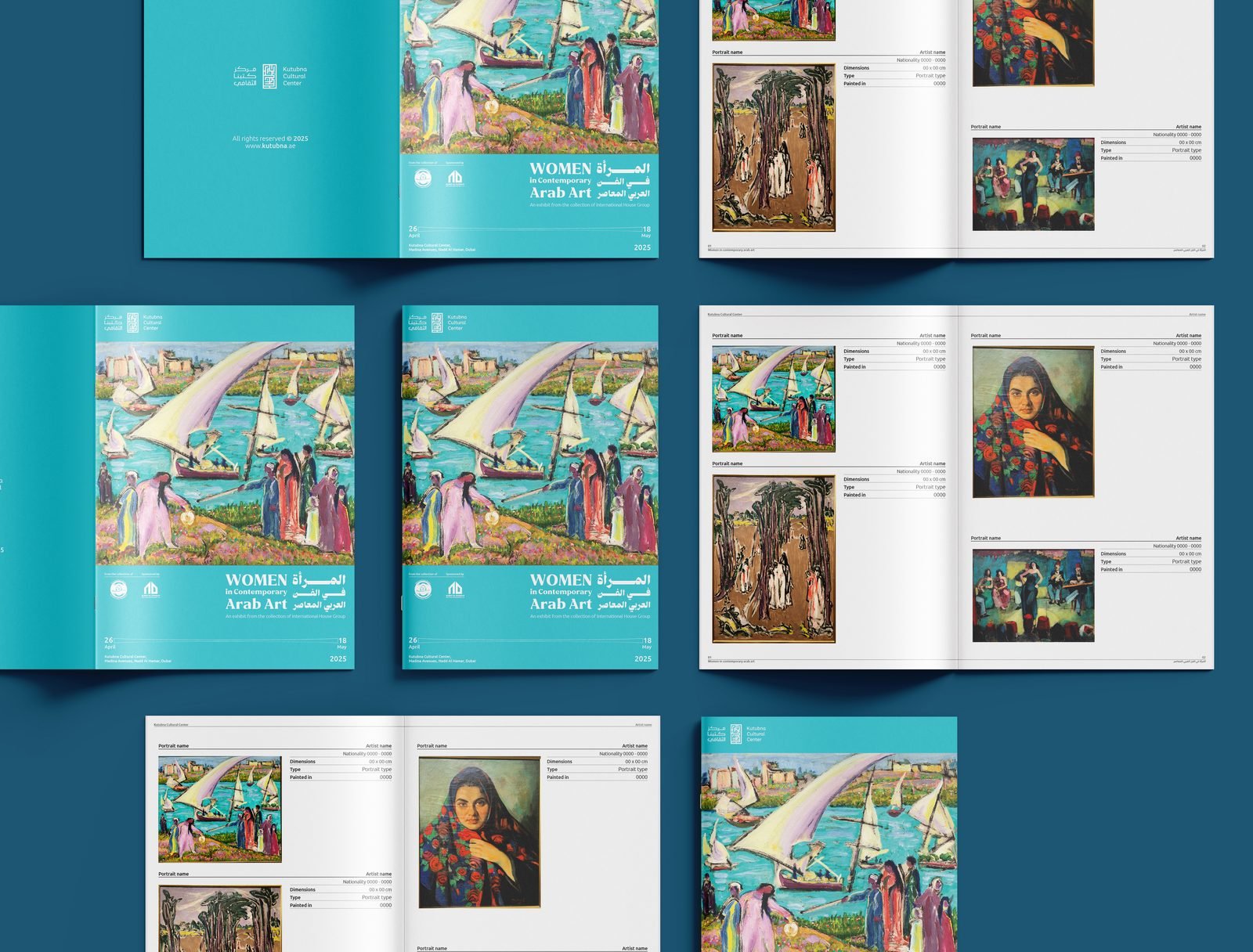
44 pages, two languages, one rhythm.
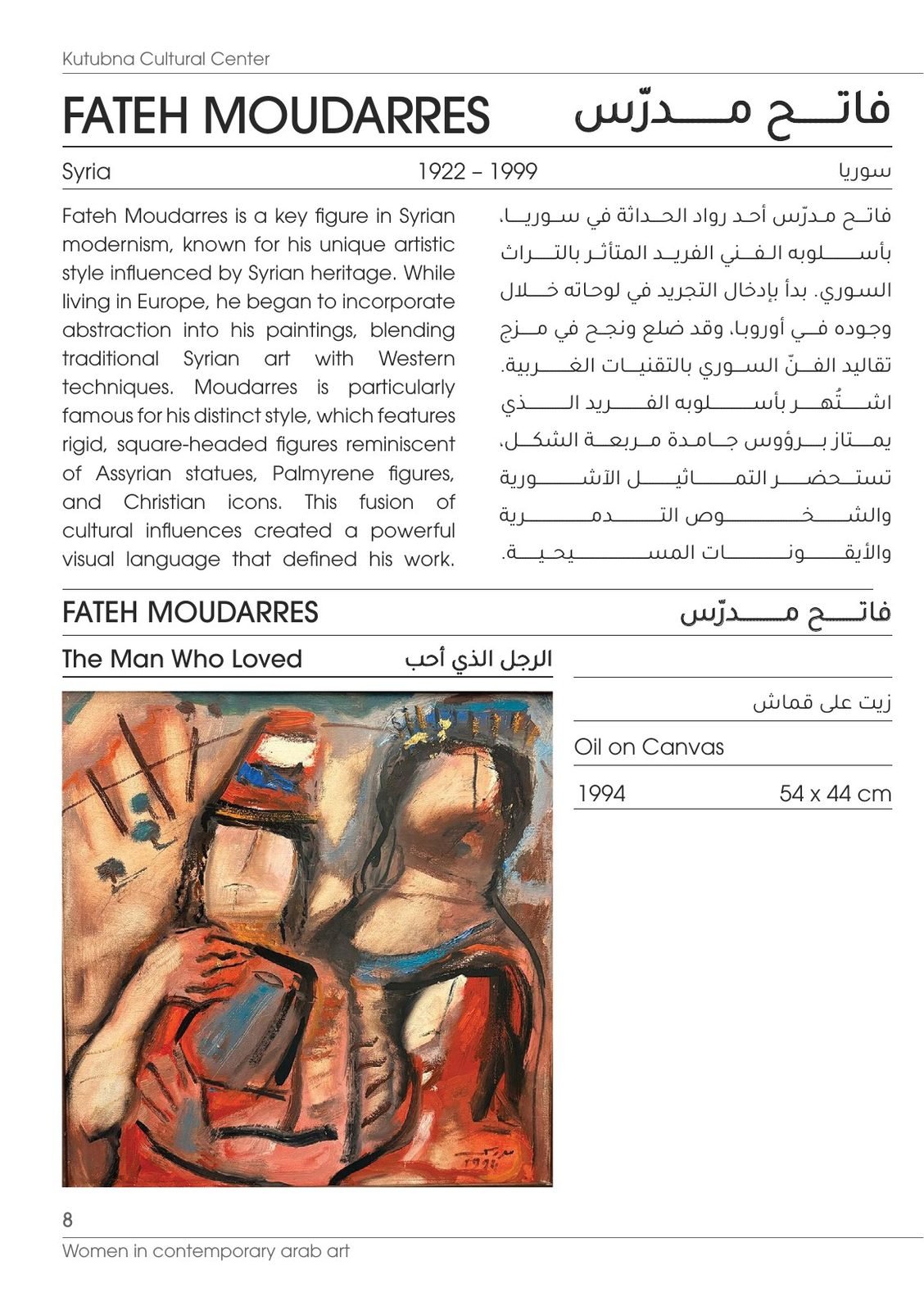
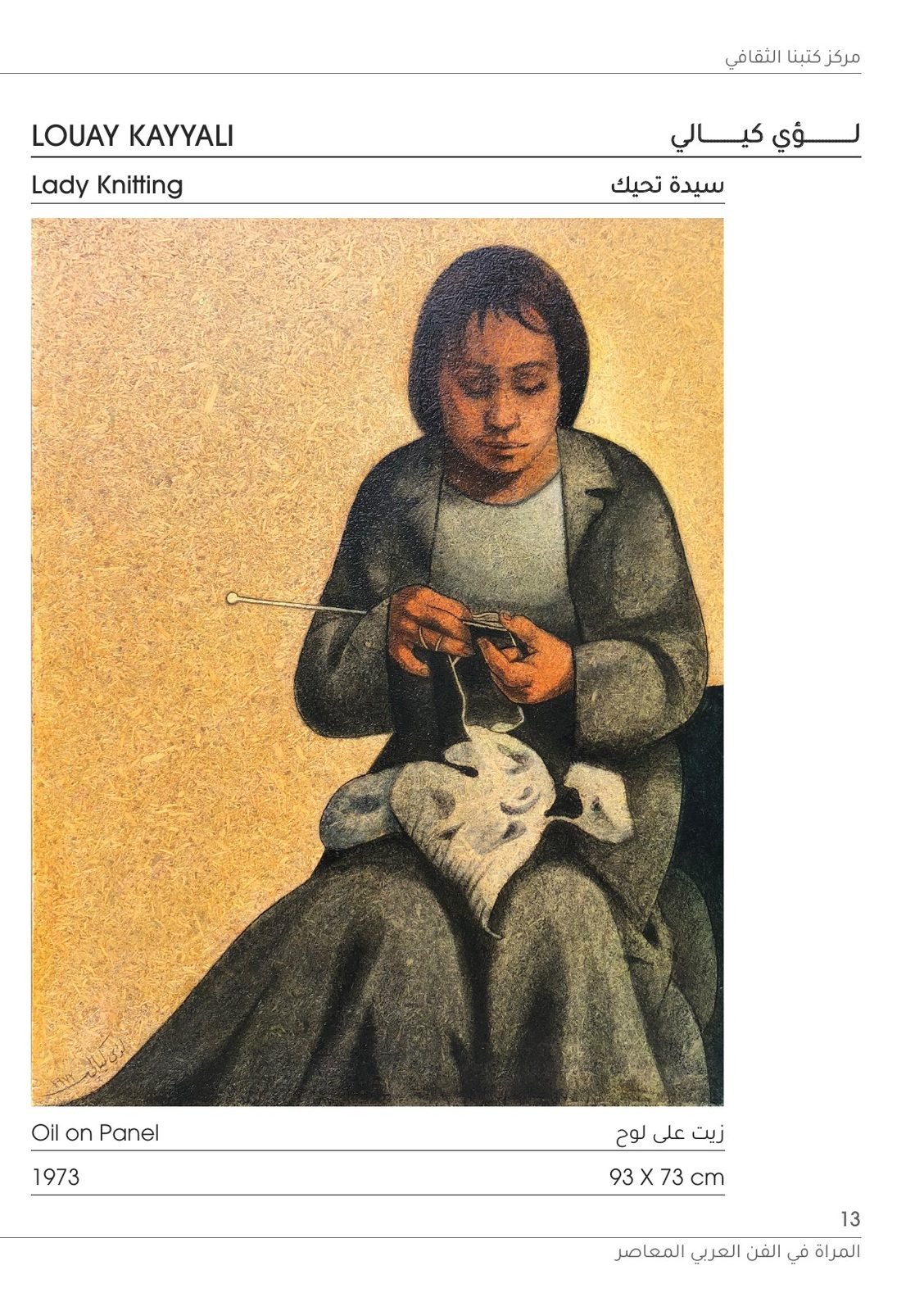
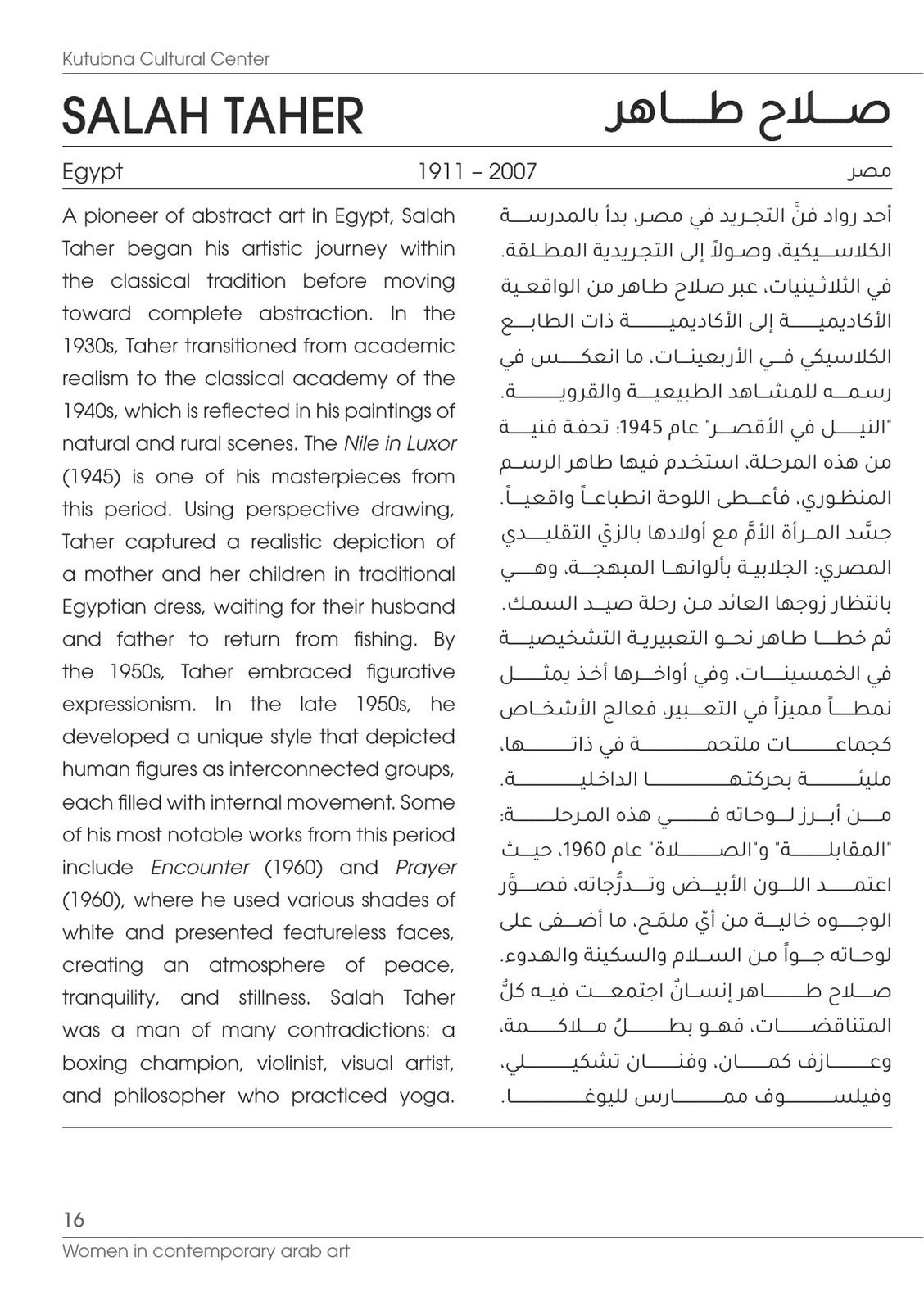
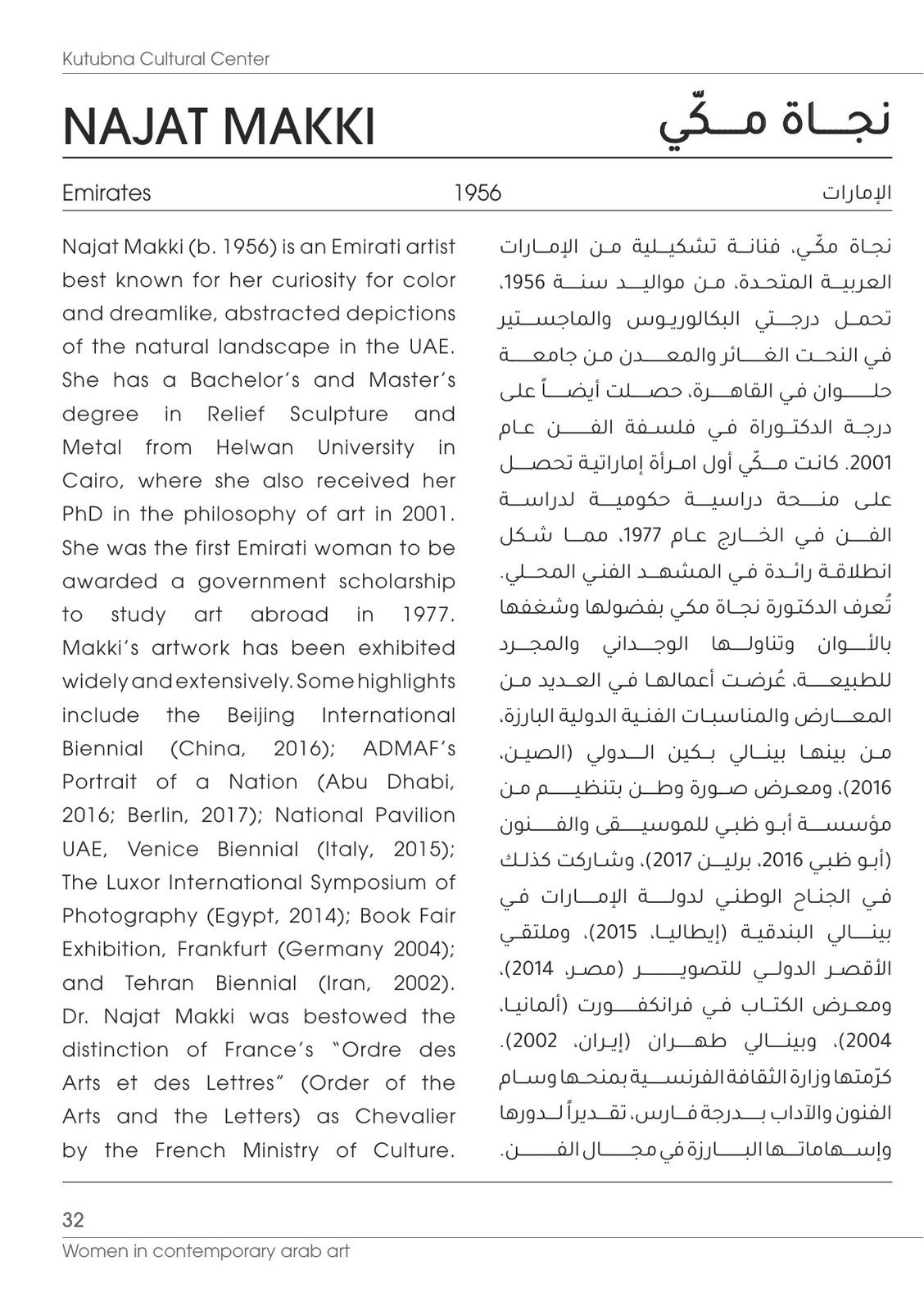
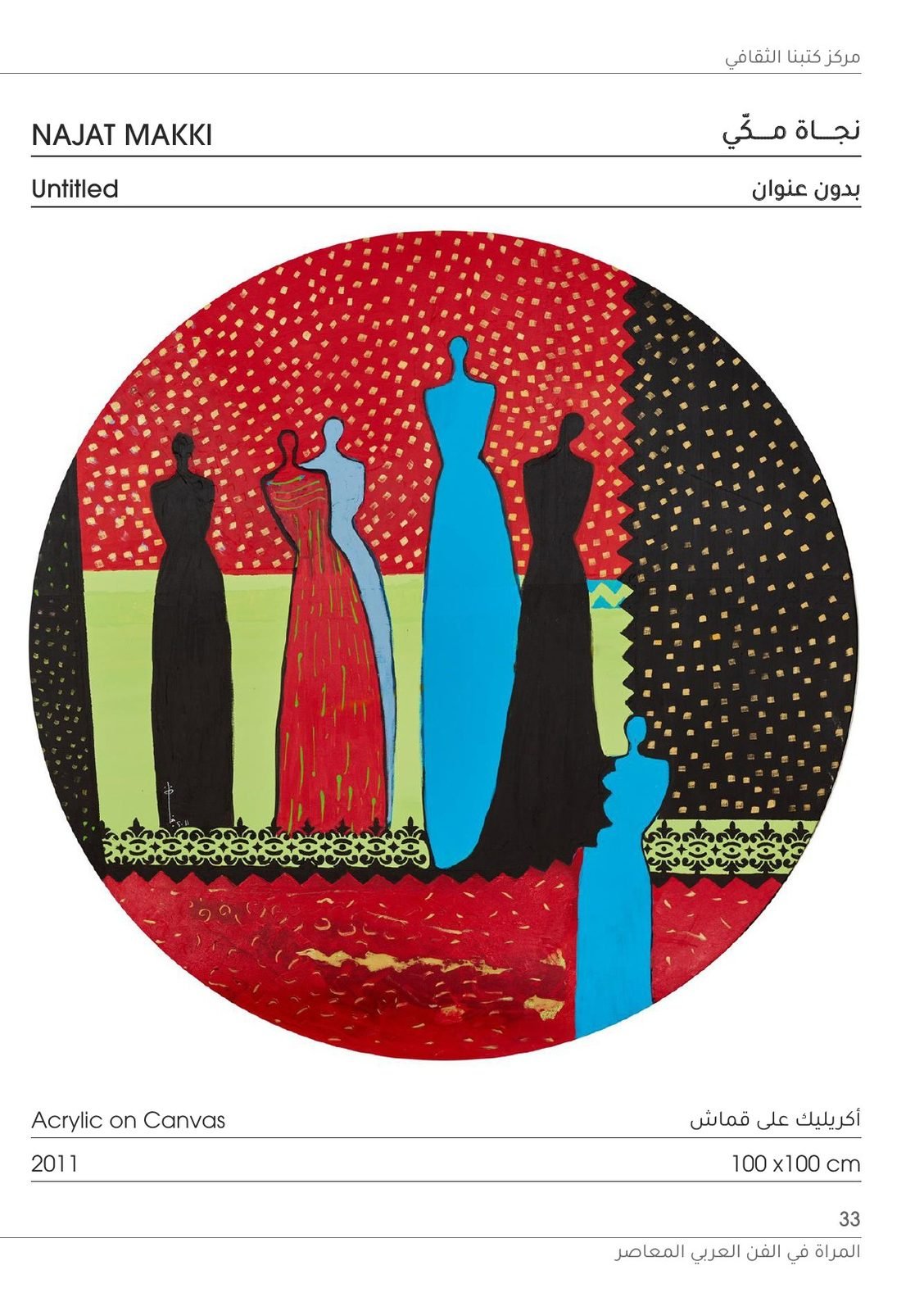
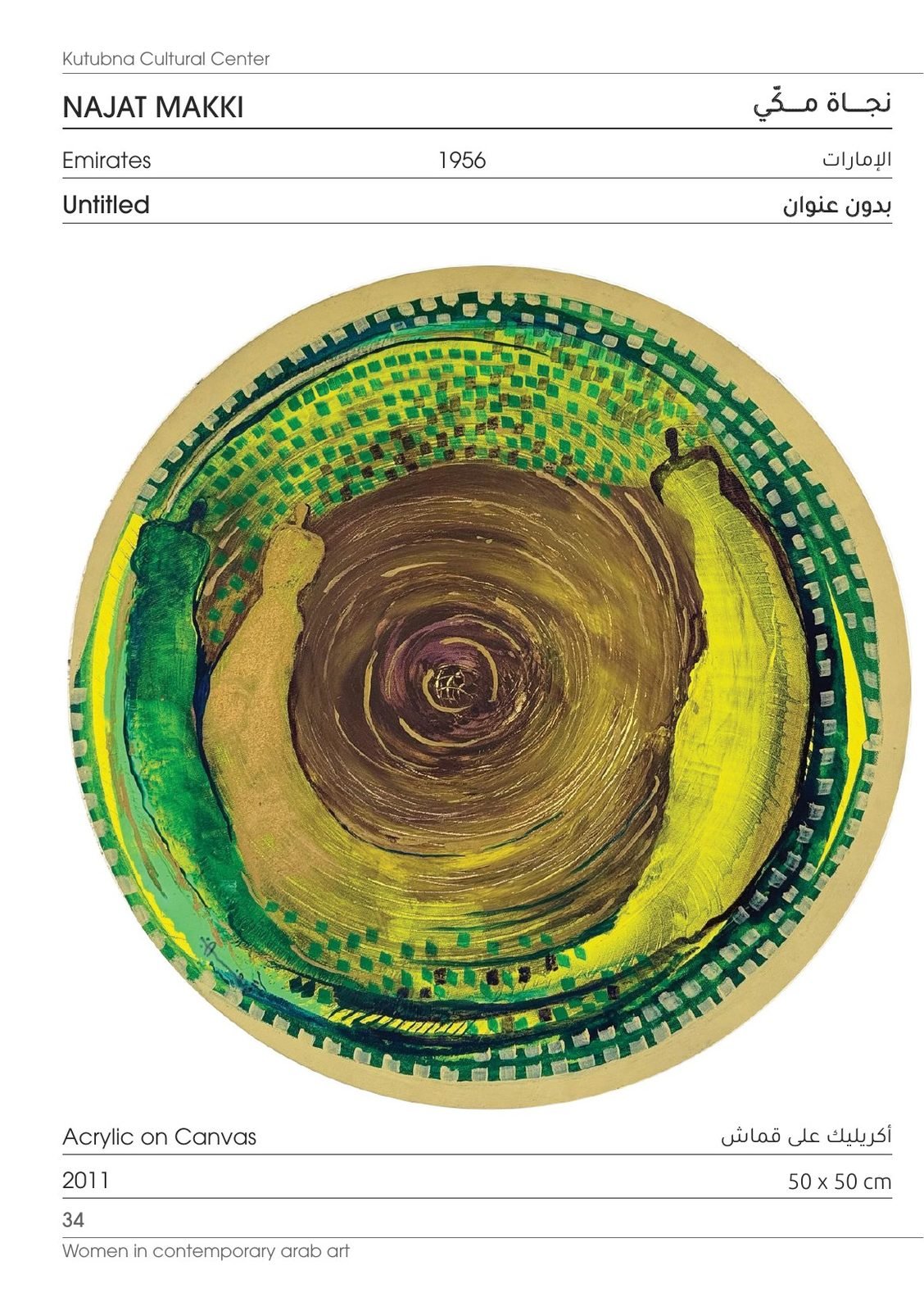
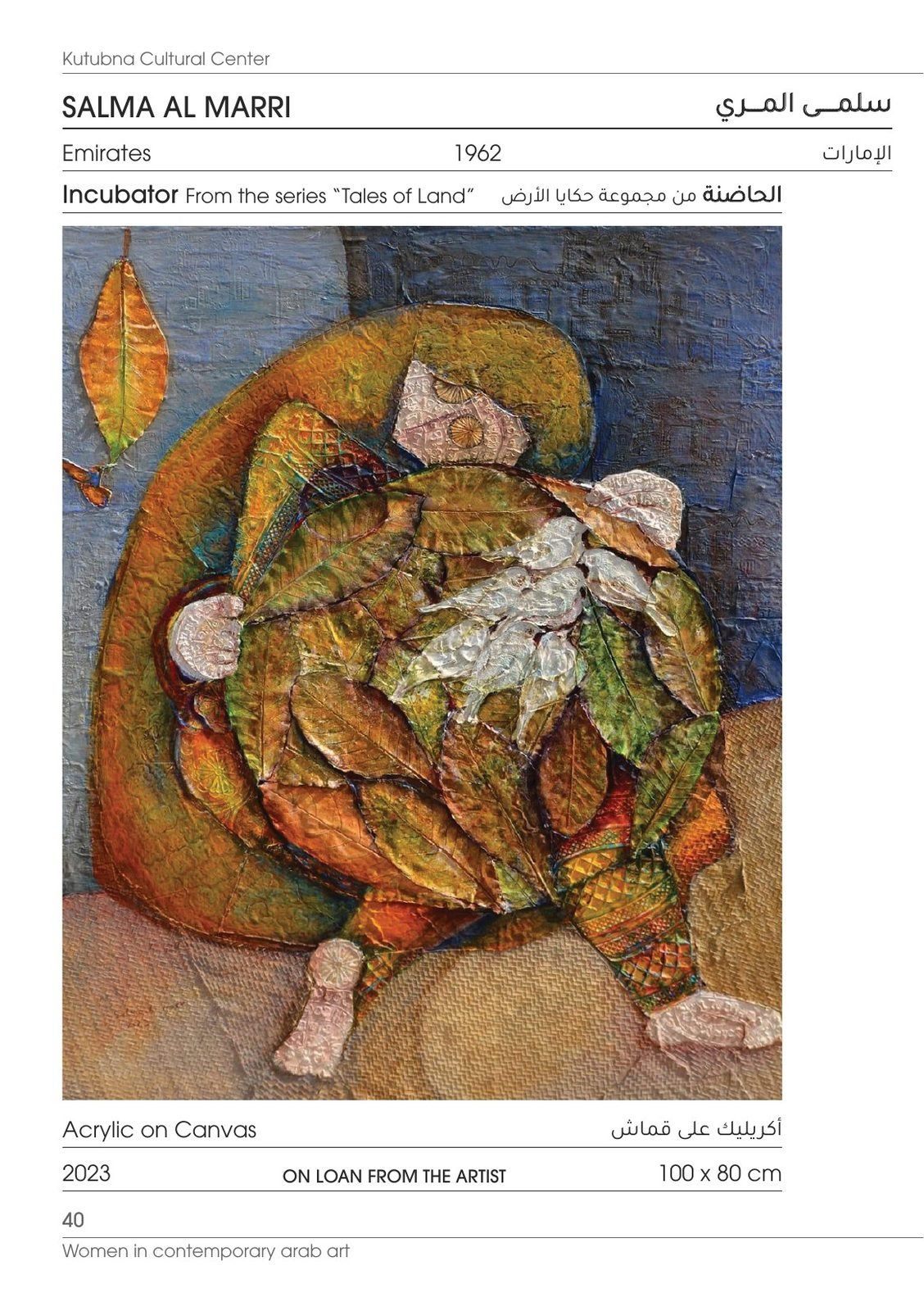
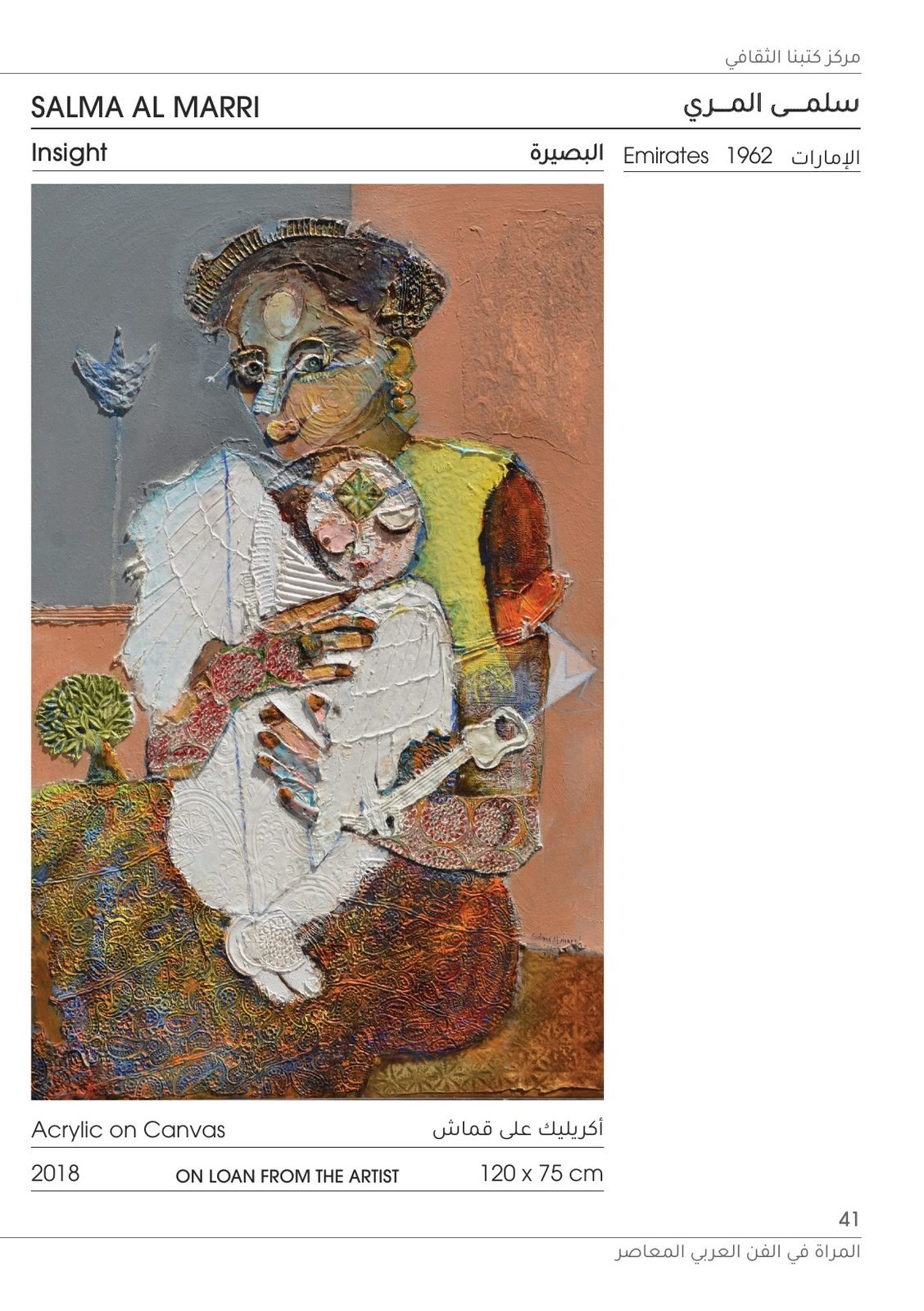
Every artist opens with a bilingual biography; every work gets its own plate with title, year, medium and size in English and Arabic. The grid stays still so the paintings, from Adham Wanly to Najat Makki, can change everything else.
07Inviting the city
From the poster to the phone.
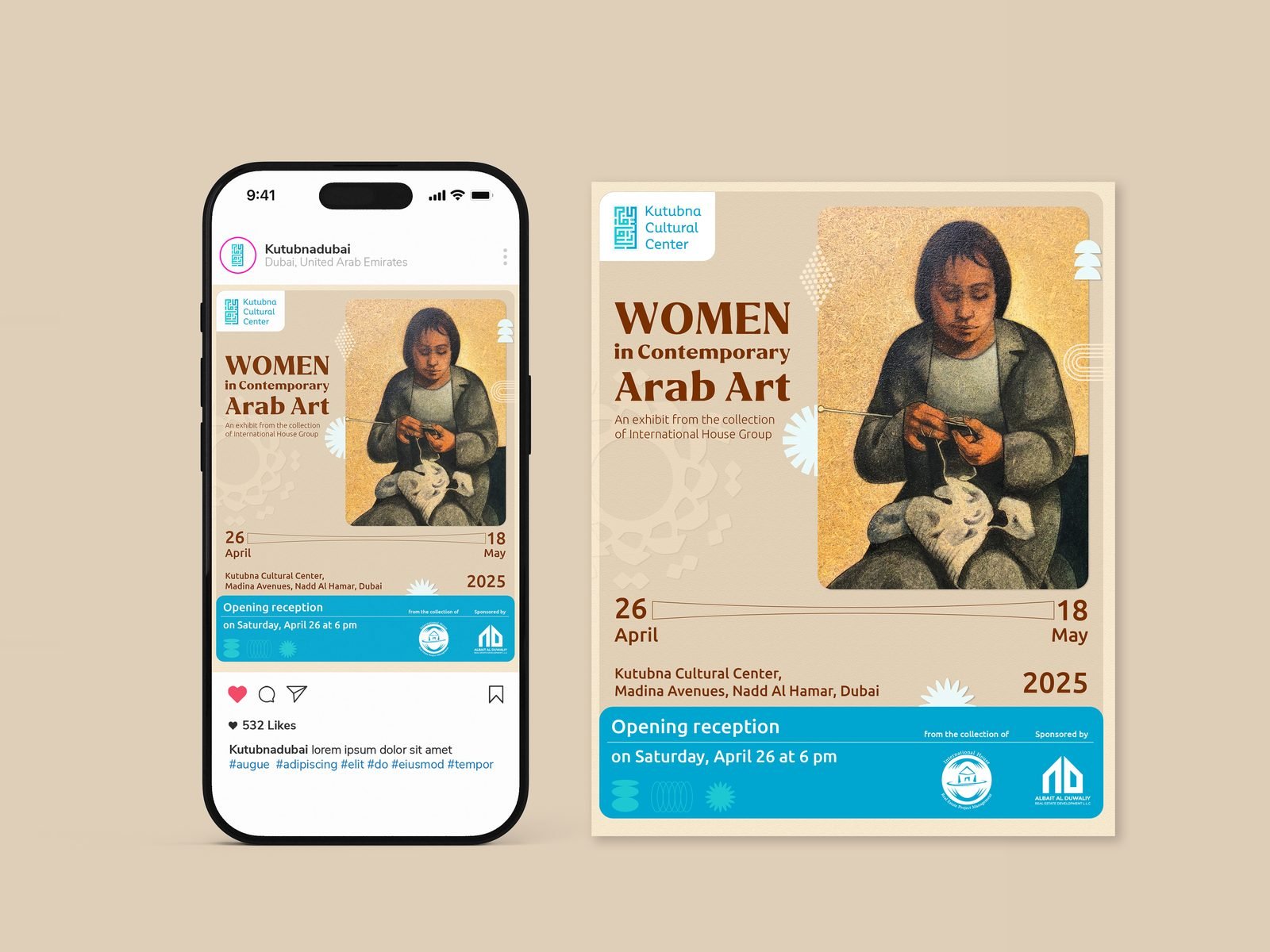
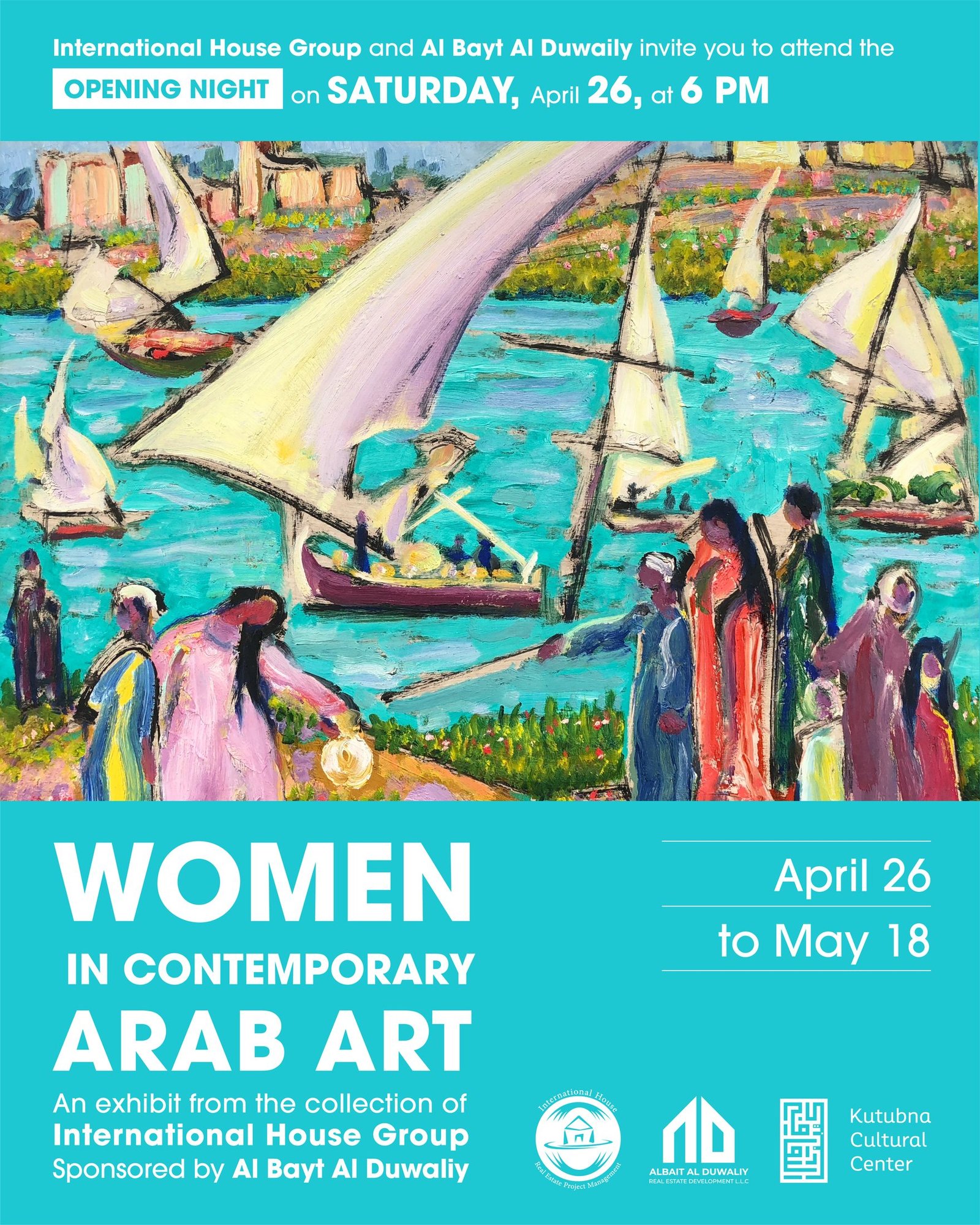
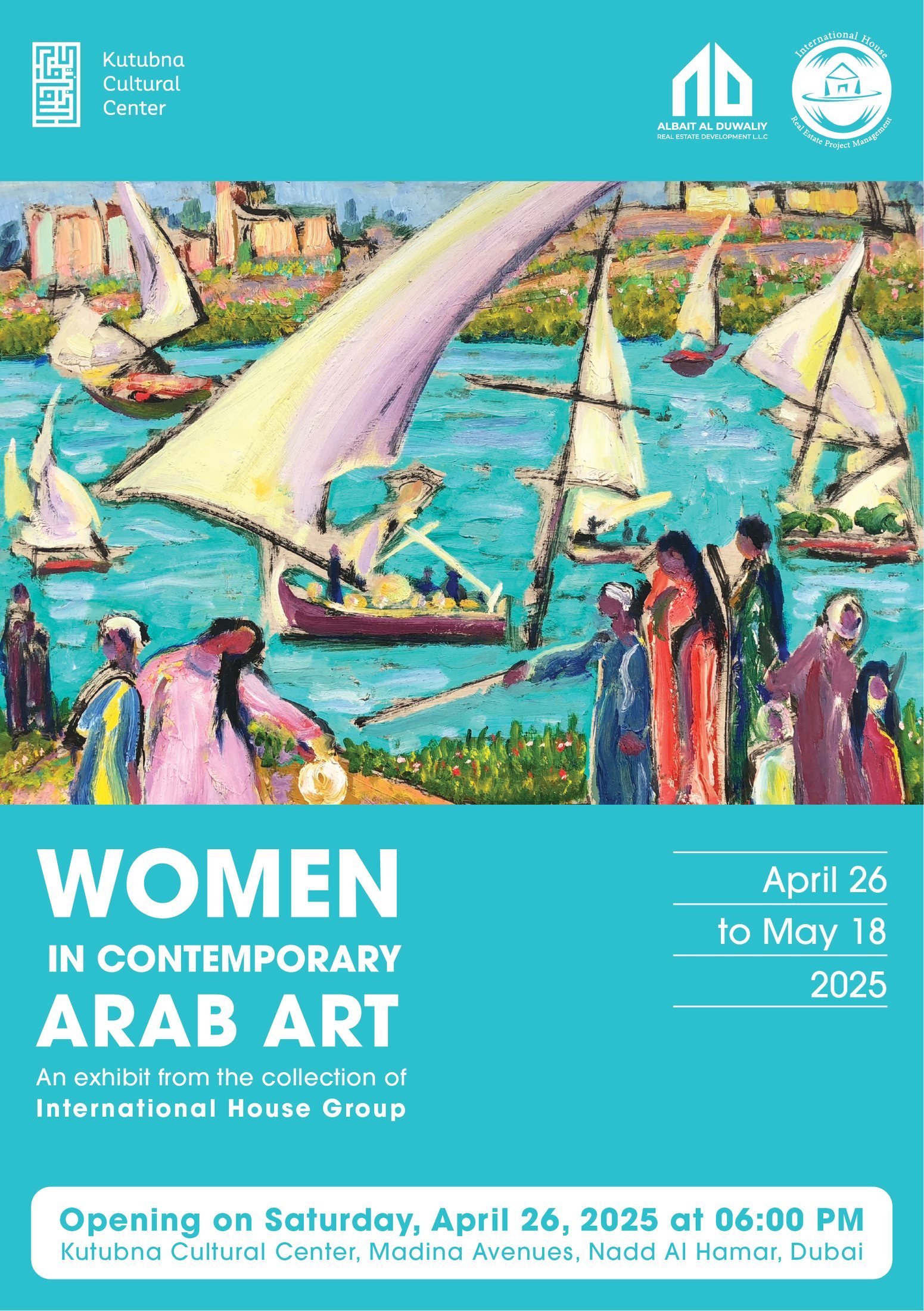
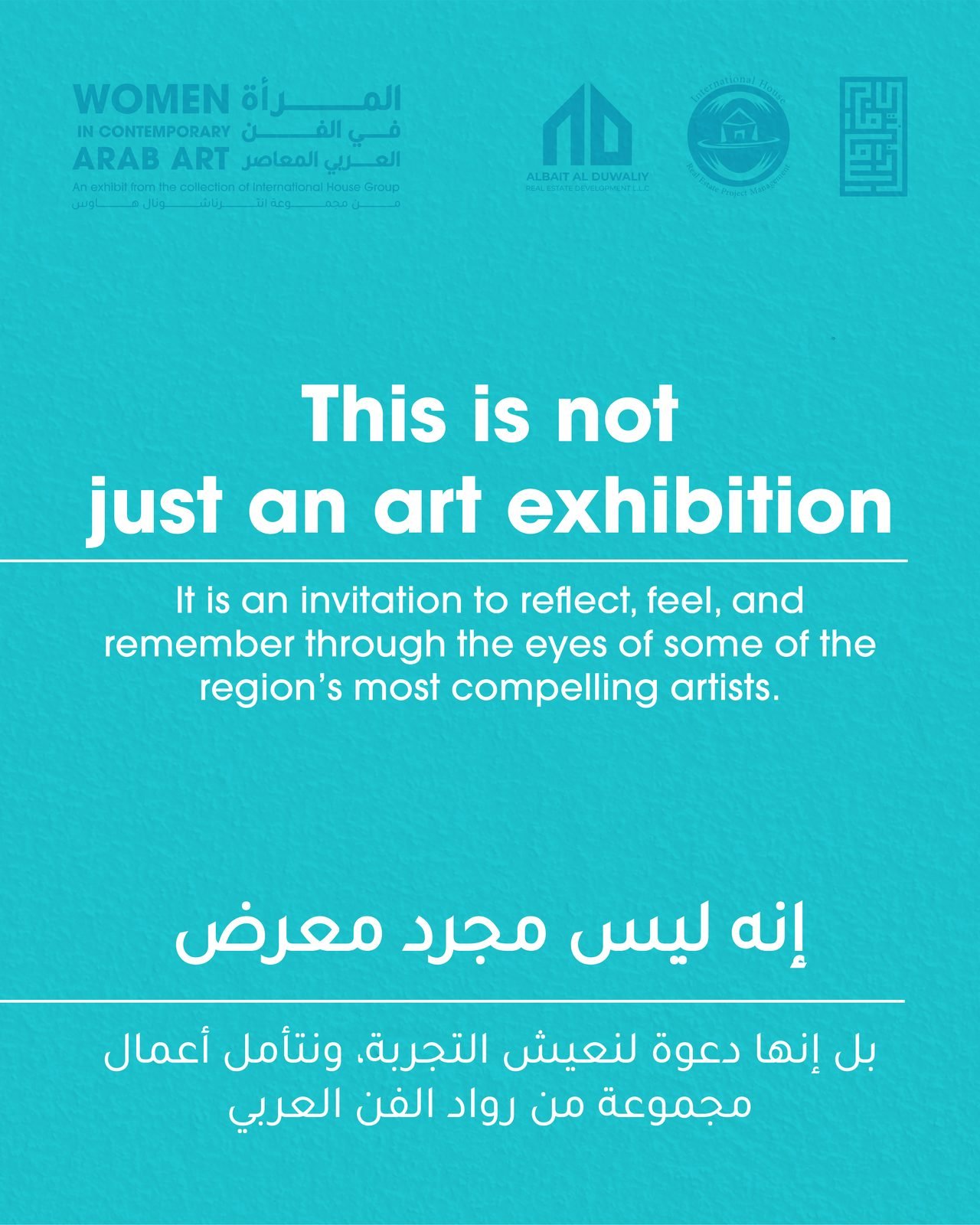
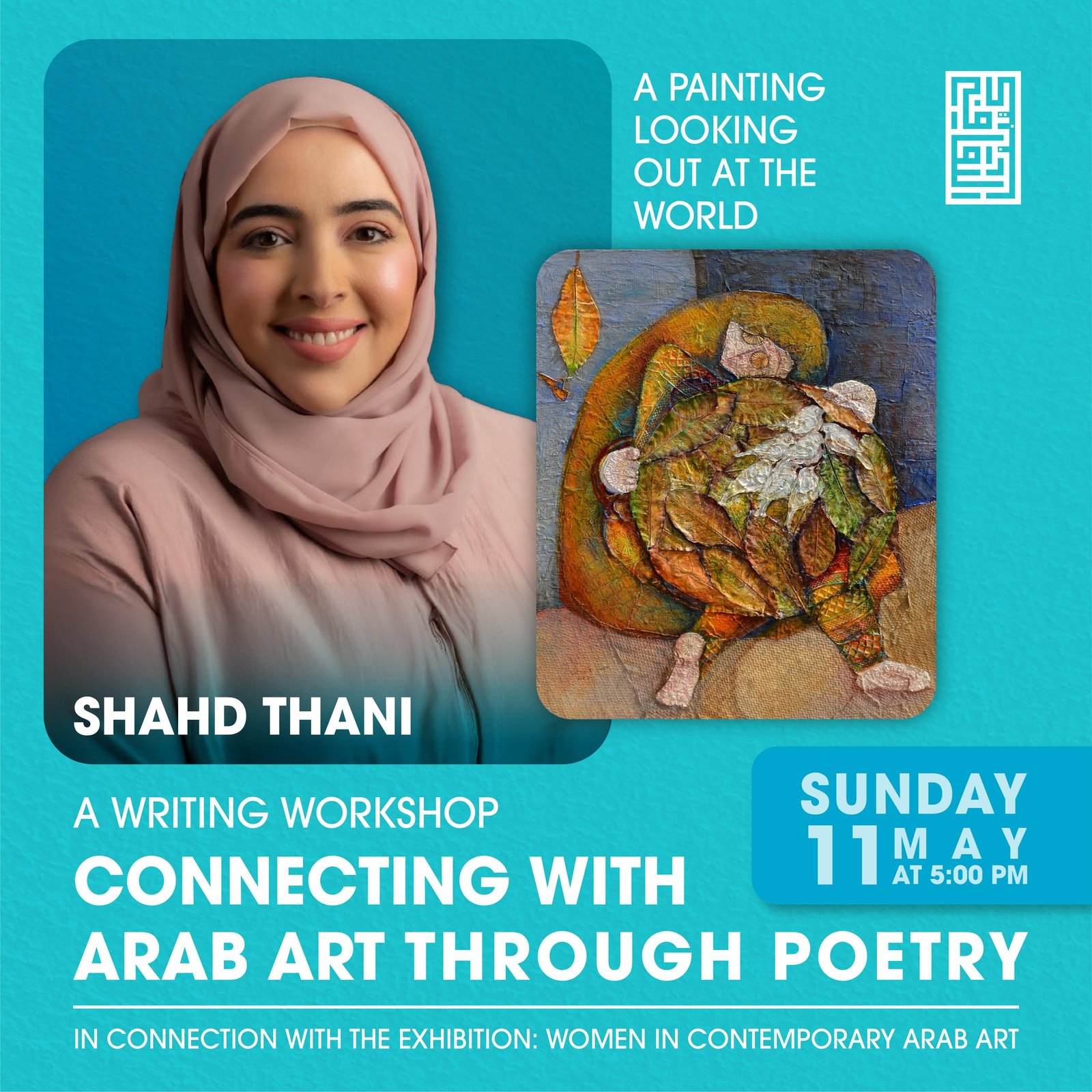
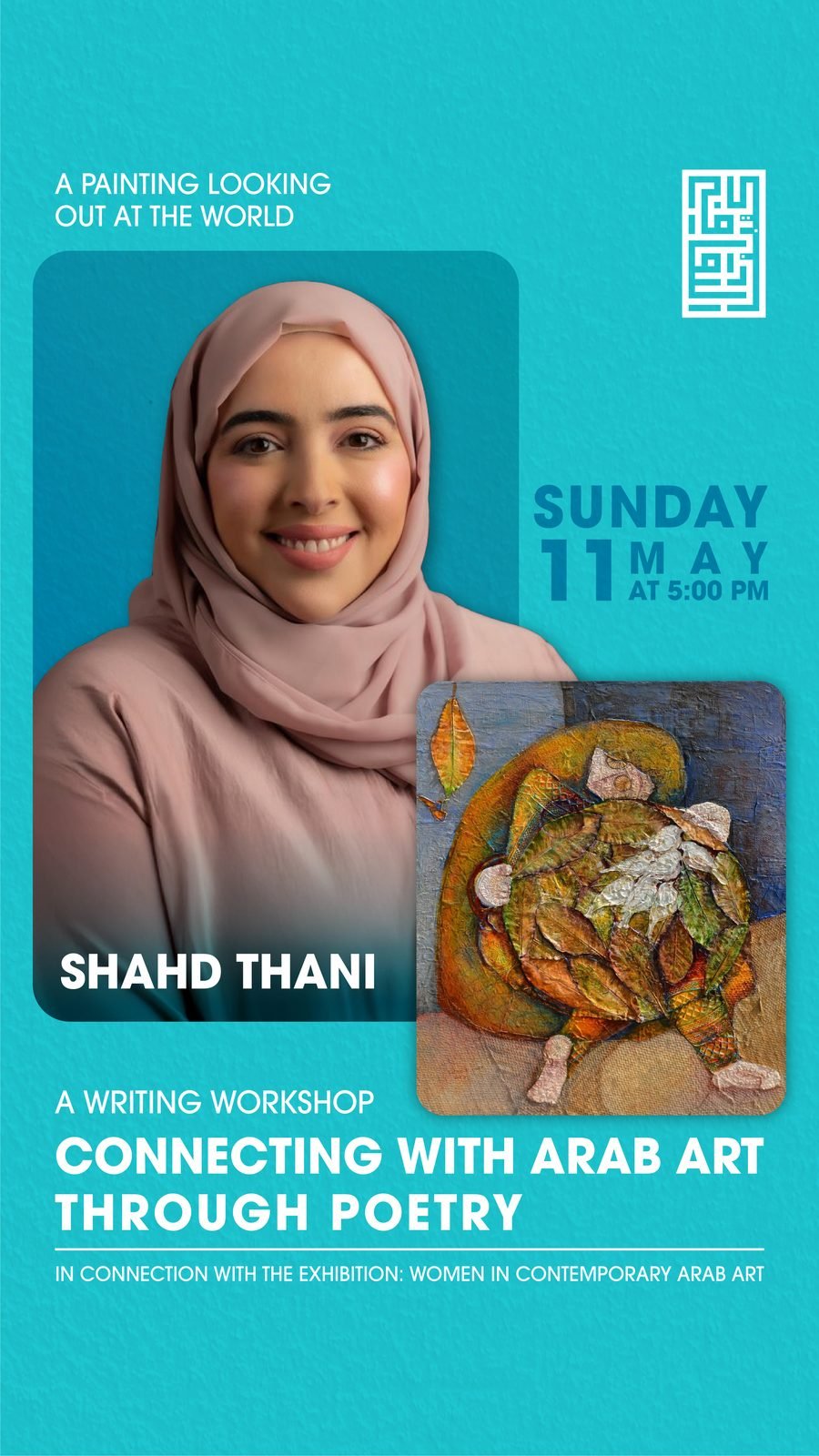
The same lockup and the same turquoise carried the opening-night poster, the flyer, print and digital invitations, web banners, and a social series on why the exhibition matters, then stretched to a poetry writing workshop held inside the show.
08The system that followed
Six exhibitions later, the same grammar.
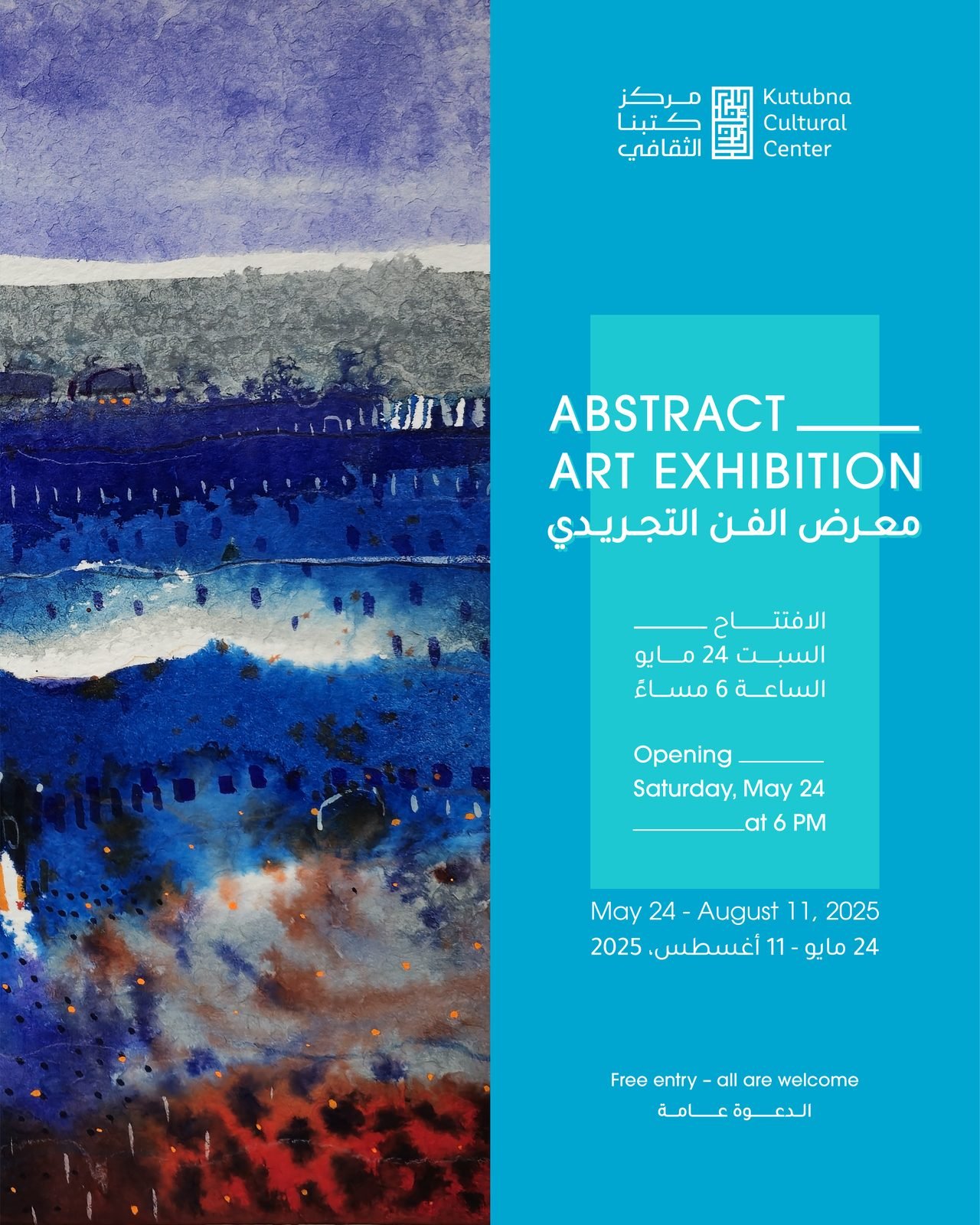
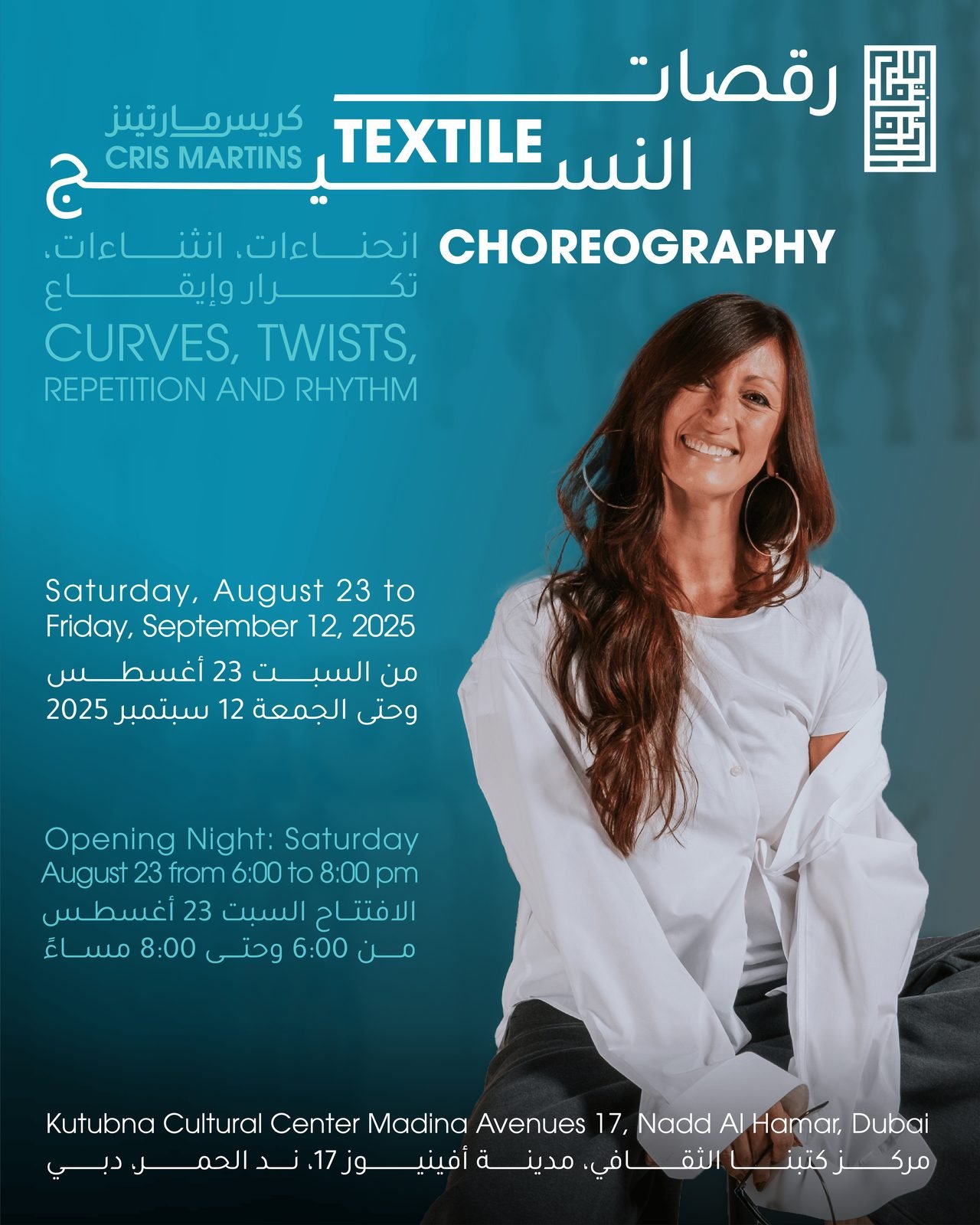
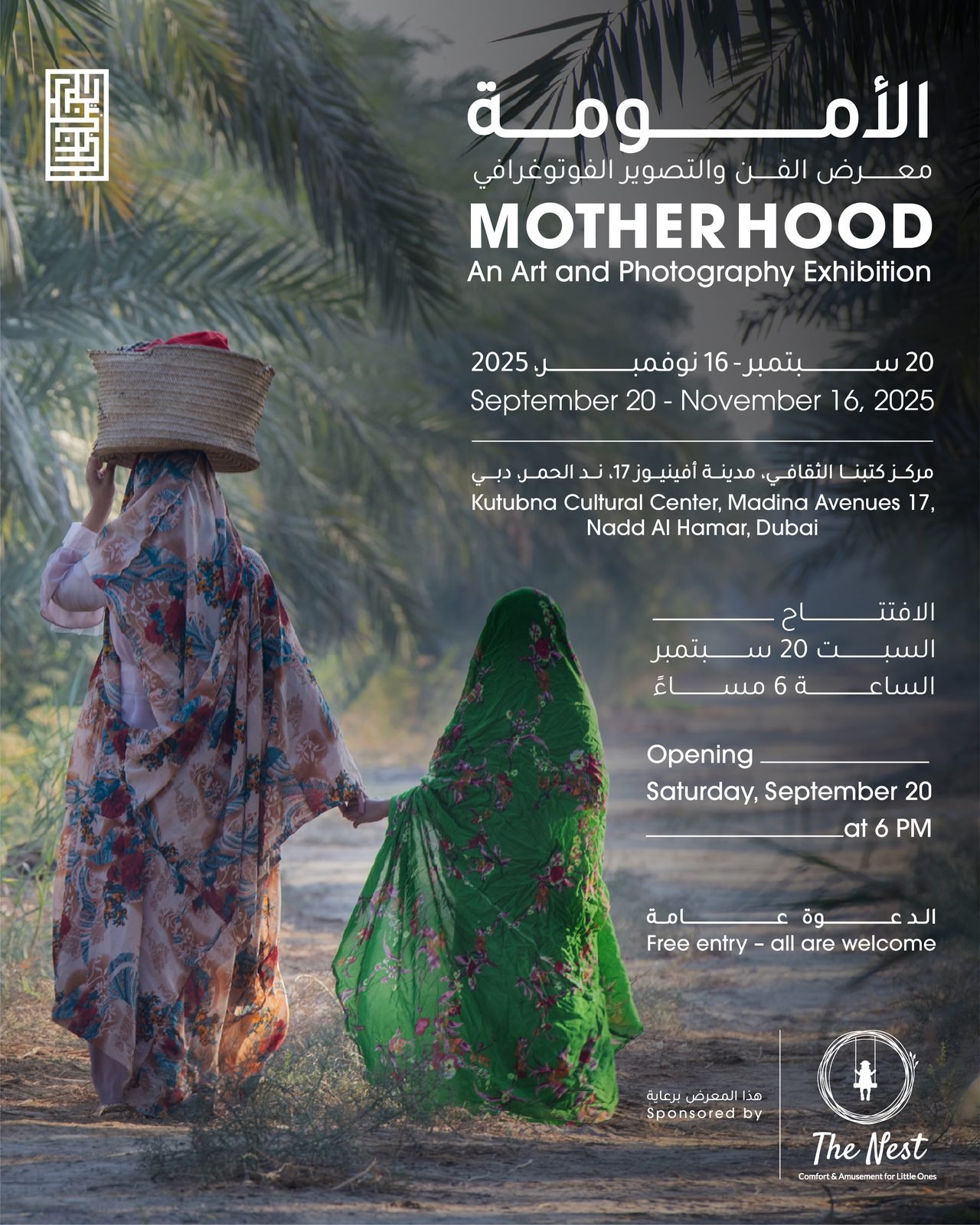
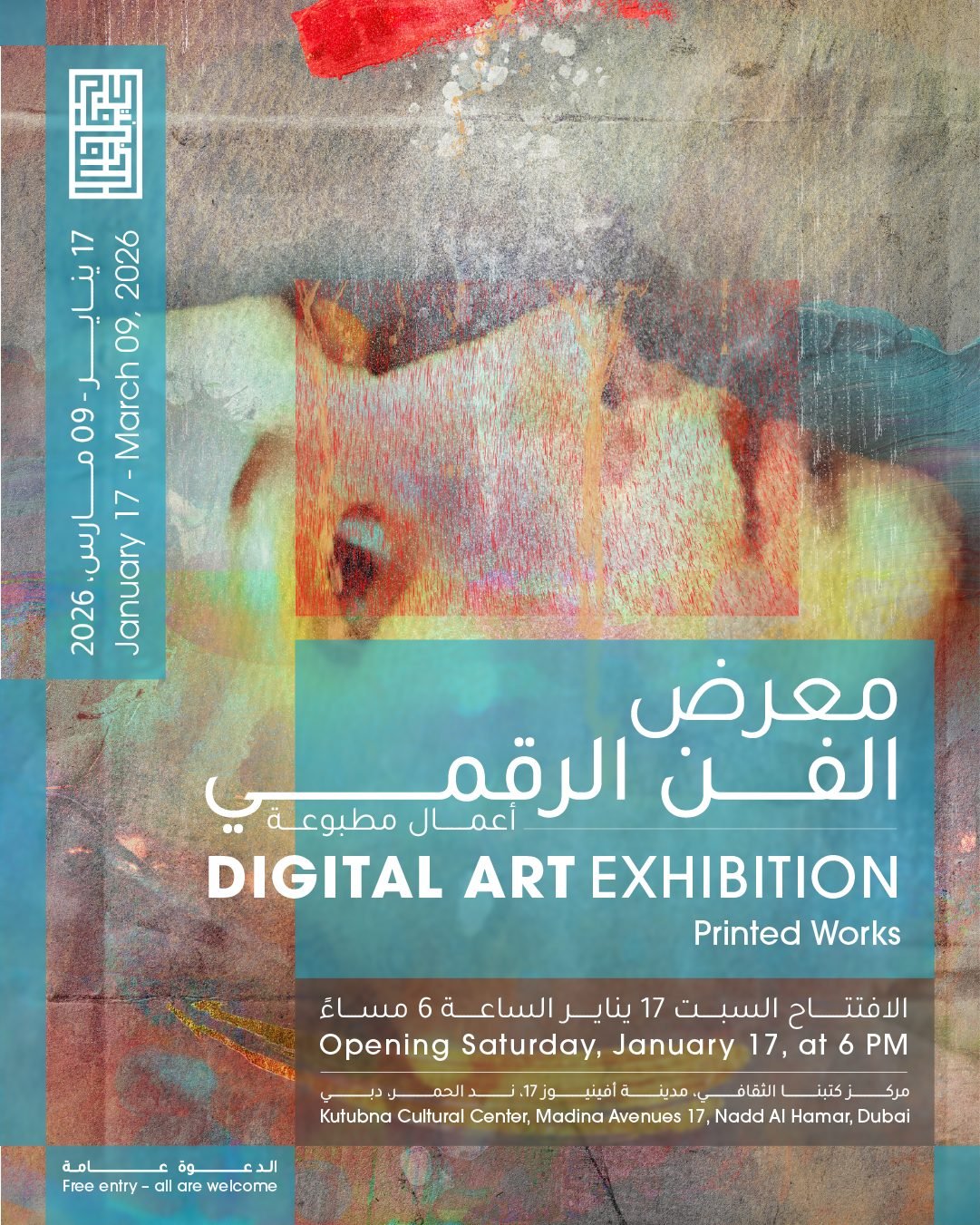
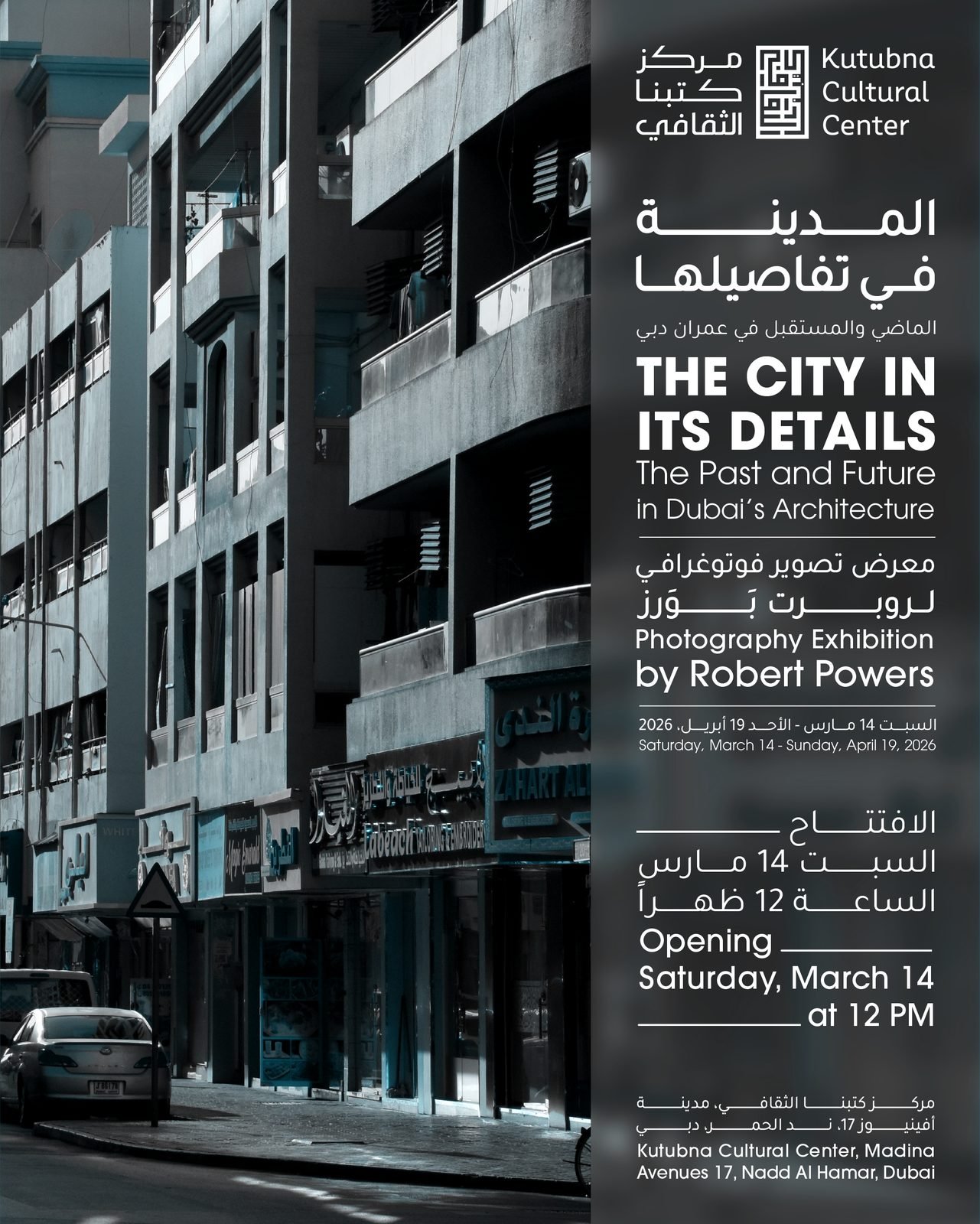
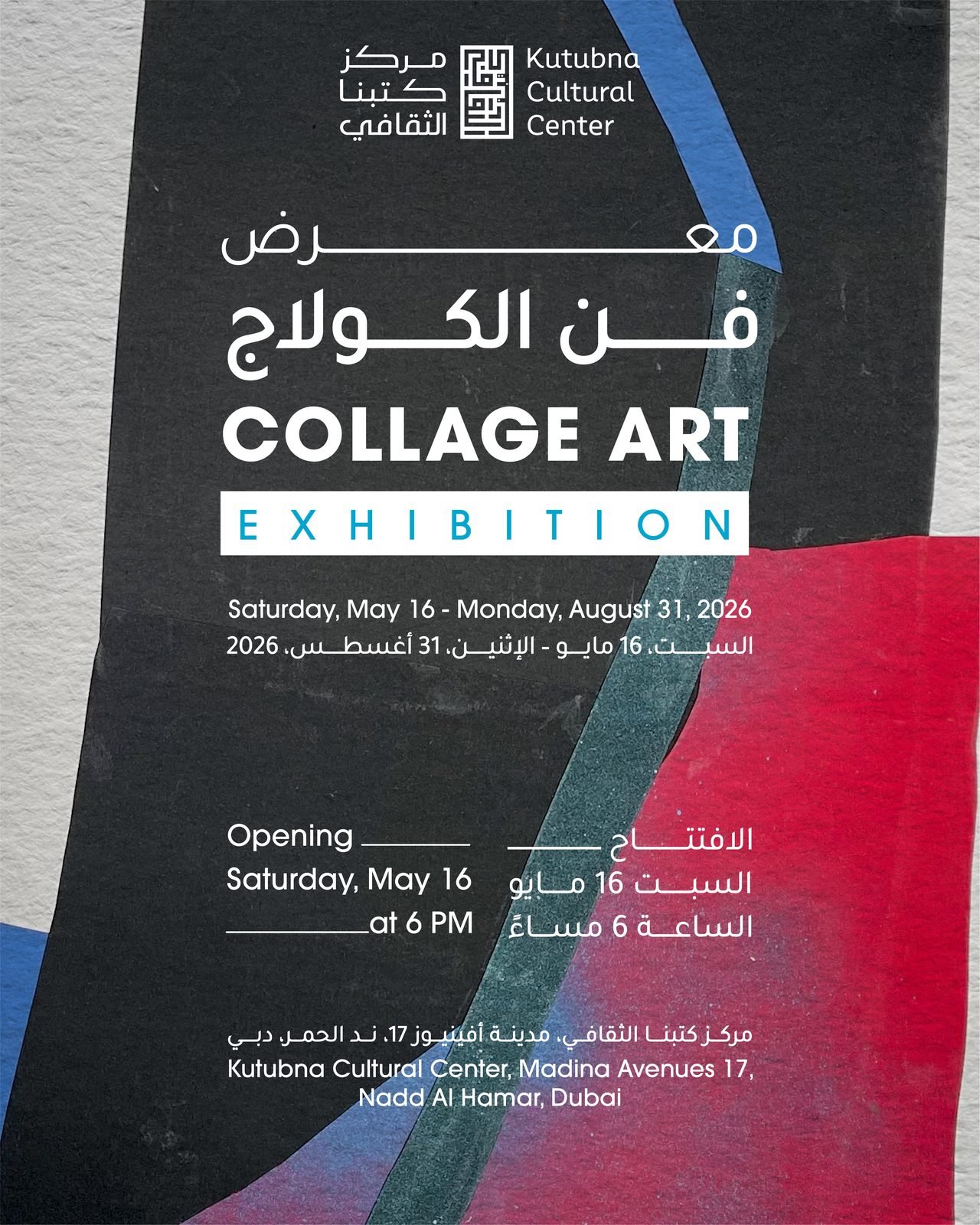
The rules set here became Kutubna’s exhibition language: the artwork fills the frame, a bilingual title block sits on a single colour drawn from the work, and dates and opening details run in matching English and Arabic columns under the Kutubna mark. Every show since has followed it.
The result
A complete exhibition identity for Kutubna’s first show, 26 April to 18 May 2025, and more than that: a repeatable exhibition system the center has used for every show since, from Abstract Art to Collage Art.
- Research & moodboard
- Exhibition mark
- Colour & type system
- Key visual & posters
- A4 flyer
- 44-page bilingual catalogue
- Print & digital invitations
- VIP invitation
- Website banners
- Social posts, carousels & stories
- Side-event campaign
- Exhibition system for future shows
Planning an exhibition or cultural programme?
The art speaks. We make sure the room listens.
Galleries and cultural centres work with us to give a show one clear voice, without standing in front of the work.
 BOOK A FREE CALLBOOK A FREE CALLBOOK A FREE CALLBOOK A FREE CALLBOOK A FREE CALLBOOK A FREE CALLBOOK A FREE CALLBOOK A FREE CALLBOOK A FREE CALL